The Quiff Hairstyle: 28 Stylish Variations For Modern Men
The quiff has stuck around for a reason. It sits somewhere between a pompadour and a fringe, giving men height at the front without demanding hours in front of a mirror. Barbers still rank it among the most requested cuts because it works on almost any face shape, adapts to straight, wavy, or curly hair, and looks just as sharp in a boardroom as it does on a night out.
If you’re thinking about switching up your look, this guide breaks down 28 quiff variations you can bring straight to your barber, along with what makes each one different, who it suits, and how to keep it looking sharp between appointments.
Trendy Men’s Quiff Haircut Ideas
Classic Quiff
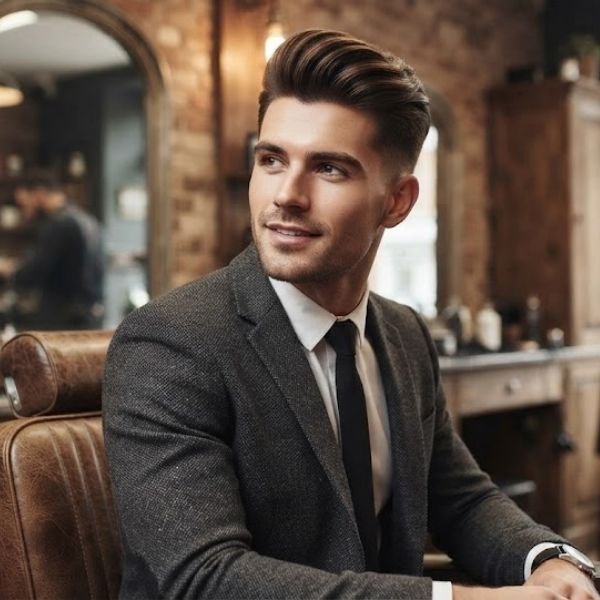
The classic quiff is where every other version on this list started. It keeps the top a few inches long, brushed upward and slightly back, with the sides trimmed short for contrast. There’s no dramatic fade or exaggerated texture here, just a clean, well-groomed shape that works for job interviews, weddings, or a regular Tuesday. A matte pomade keeps the finish natural rather than glossy.
Messy Quiff
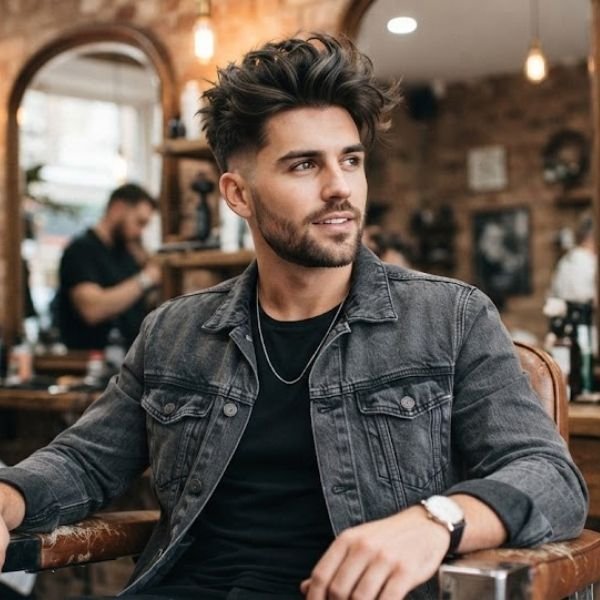
Instead of a smooth, combed finish, the messy quiff leans into deliberate disorder. Strands point in different directions at the crown while the front still lifts up and away from the face. It’s a low-effort look that actually takes a bit of skill to get right, since the “just rolled out of bed” effect needs a light styling paste and fast fingers rather than a comb.
Textured Quiff
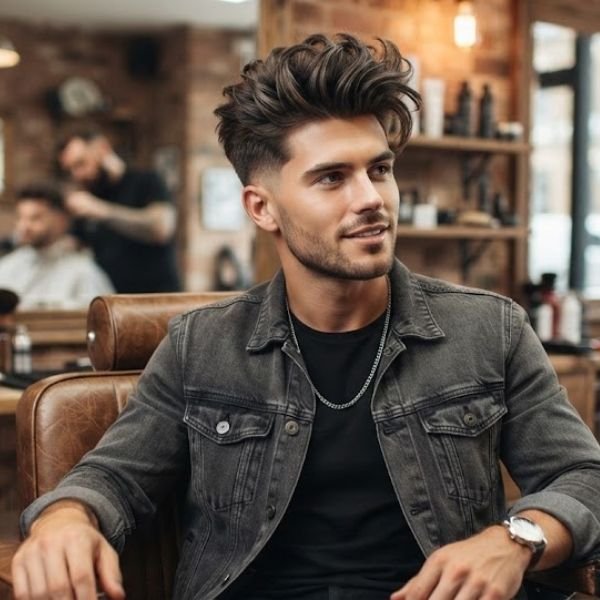
Texture is created through layered cutting, so the top has visible separation instead of one uniform block of hair. This version adds movement and depth, making fine or flat hair look thicker than it is. A sea salt spray or texturizing powder helps strands hold their shape without stiffening them.
Modern Quiff
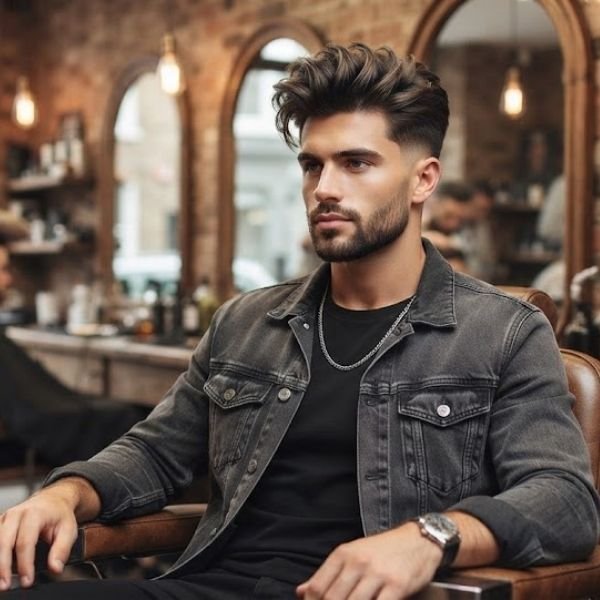
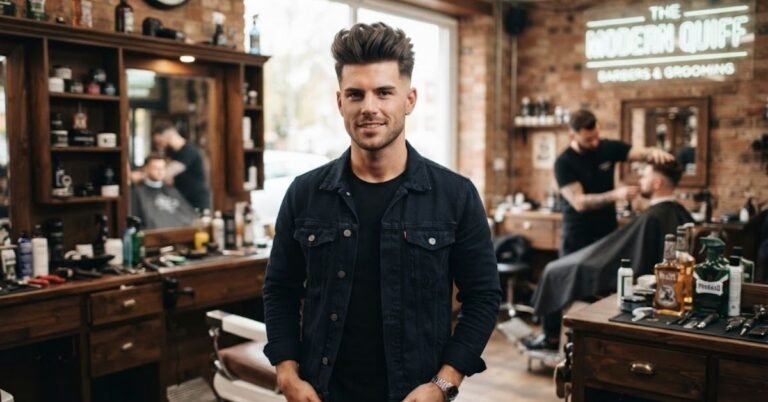
The modern quiff trades vintage slick-back polish for a softer, more relaxed silhouette. Sides are often tapered rather than shaved to the skin, and the top is styled forward with a slight lift rather than a tall, rigid peak. It suits guys who want a quiff without looking like they stepped out of a 1950s diner.
Short Quiff
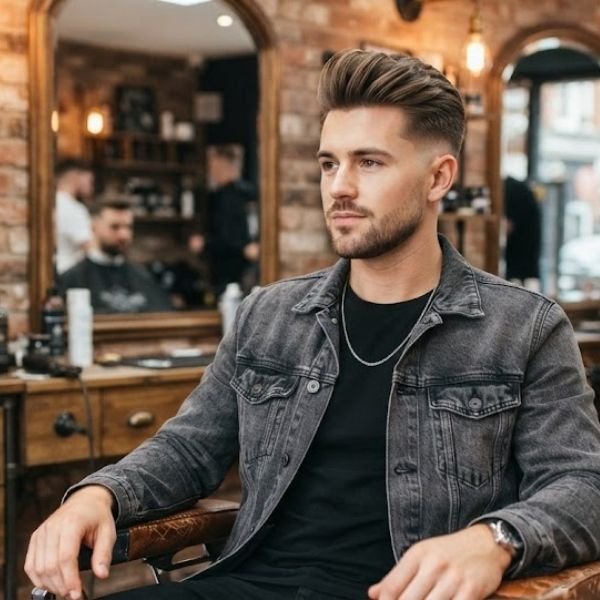
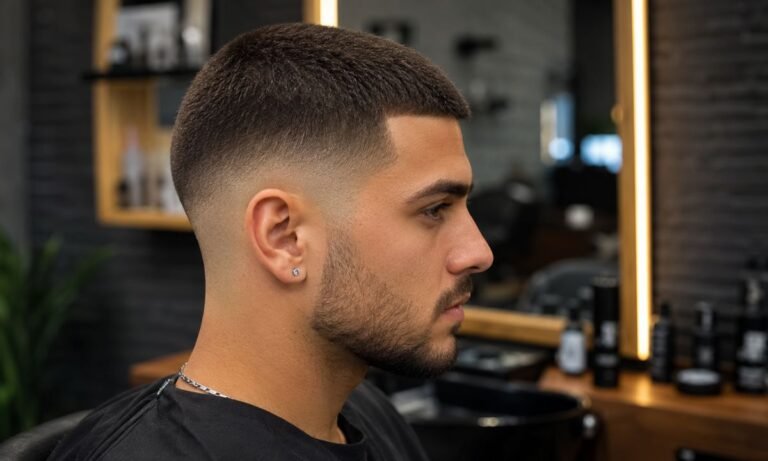
For men who don’t want to deal with long styling routines, the short quiff keeps the top length minimal while still lifting it upward at the front. It’s practical for the gym, for humid climates, and for anyone growing out a buzz cut. Even at a shorter length, a small dab of pomade is enough to hold the shape.
Quiff Fade
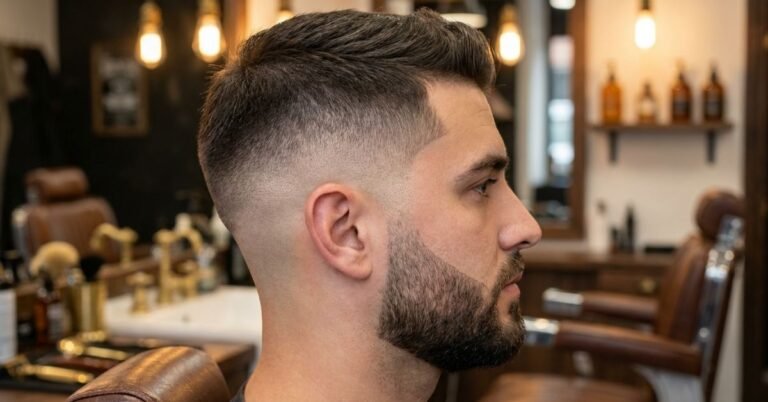
Pairing a quiff with a fade brings sharp contrast between the long top and the closely cropped sides. The fade can be high, mid, or low depending on how bold you want the transition to look. This combination is one of the most requested at barbershops because it reads as both classic and current at the same time.
Medium Quiff
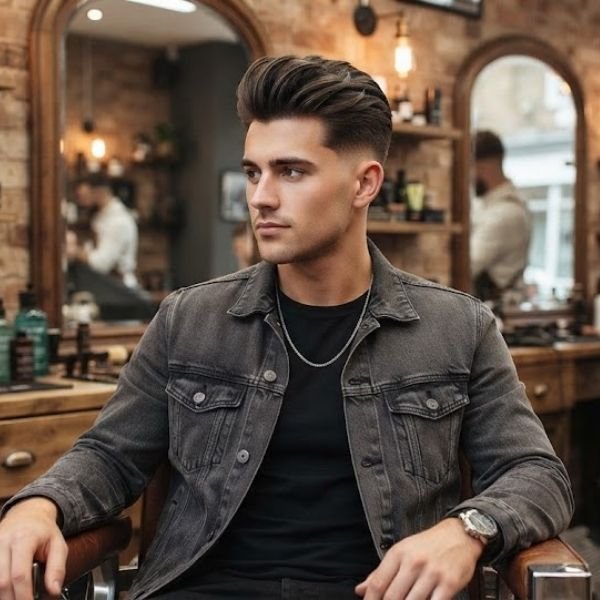
Sitting between the short and long versions, the medium quiff gives enough length to create real height and movement without needing a blow dryer and round brush every morning. It’s a flexible middle ground for men who want options, since medium length can be styled up, forward, or brushed back depending on the day.
Quiff with Beard
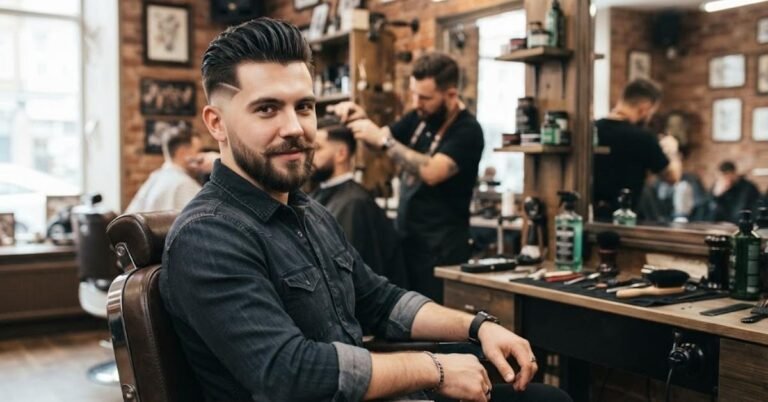
A well-groomed beard balances the volume up top, framing the face from both ends. This pairing works particularly well for square and oval face shapes, where the beard adds width at the jaw while the quiff adds height at the crown. Keep both trimmed regularly so neither one overwhelms the other.
Short Quiff with Low Taper Fade
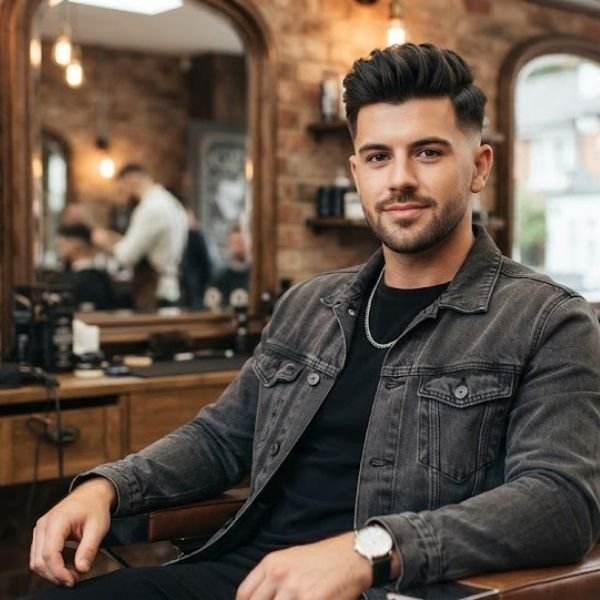
This version keeps the top compact while a low taper fade gradually blends the sides into the neckline. Because the fade starts close to the ears rather than higher up, it reads as more subtle and workplace-friendly than a high or skin fade, making it a safe pick for conservative environments.
Tousled Textured Quiff with Low Fade
Combining a tousled finish with layered texture and a low fade gives this style three points of interest instead of one. The low fade keeps things understated, letting the messy, textured top do the visual work. It’s a strong option for casual, everyday wear.
Wavy Quiff
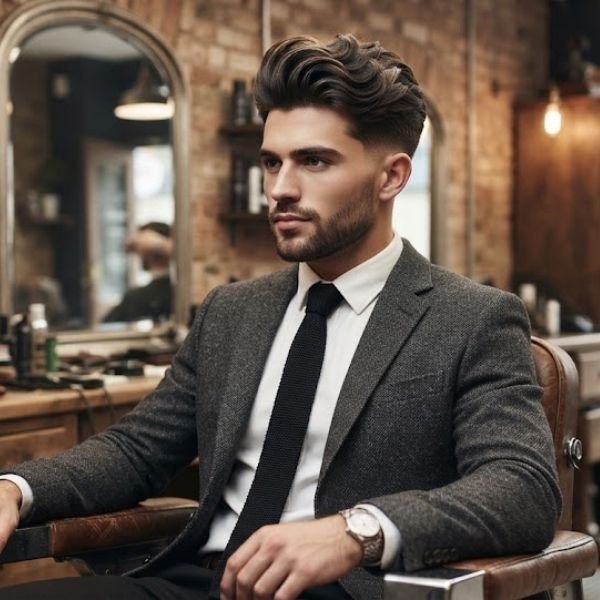
Natural waves add texture that straight hair has to fake with product. Rather than fighting the wave pattern, this style works with it, brushing the front up and letting the waves fall naturally through the mid-lengths. A lightweight curl cream keeps frizz down without flattening the wave.
Short Textured Quiff with Mid Fade
Short length, choppy texture, and a mid fade combine into a tidy, low-maintenance cut that still has personality. The mid fade sits higher than a low fade but lower than a high fade, splitting the difference for men who want visible contrast without looking too severe.
Messy Quiff with Taper Fade
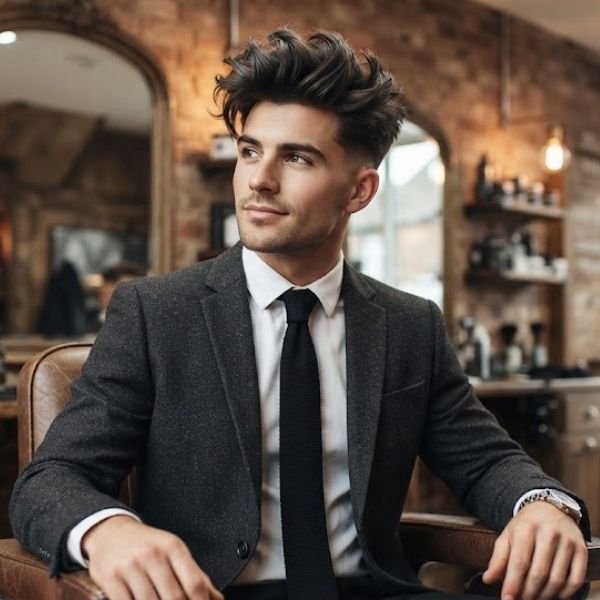
The taper fade here is softer than a skin fade, blending gradually rather than cutting sharply to the skin. Paired with a messy, textured top, the overall effect is relaxed and youthful. It’s one of the more forgiving styles if you’re growing your hair out between cuts.
Long Quiff
Length lovers can push the top past four or five inches, creating a dramatic sweep that flows back from the hairline. This version needs more upkeep, including regular trims to prevent split ends and a stronger-hold product to keep the length from collapsing by midday.
Thick Quiff Fade
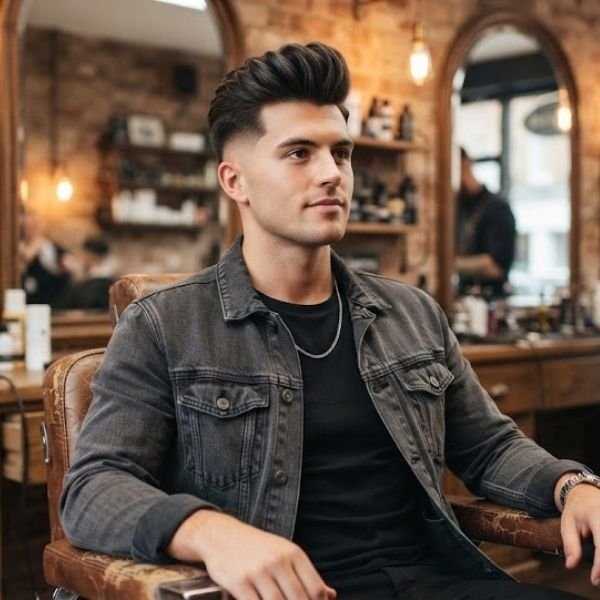
Thick hair naturally holds volume, so this variation uses that density to build height without much product. Pairing it with a fade removes bulk from the sides, balancing out the heavier top and preventing the whole look from appearing too bulky or triangular.
Full Textured Quiff with Low Skin Fade
A full, voluminous top gets extra dimension from layered texture, while a low skin fade shaves the sides down to bare skin for maximum contrast. The result is bold but still versatile enough for both formal and casual settings, since the fade stays low and out of sight under a collar.
Tousled Short Quiff with Low Fade
Short on top, tousled for texture, and finished with a subtle low fade, this cut is built for men who want quick morning styling. Rake a small amount of clay through damp hair with your fingers, and the natural tousled shape mostly falls into place on its own.
Messy Wavy Quiff with Low Taper
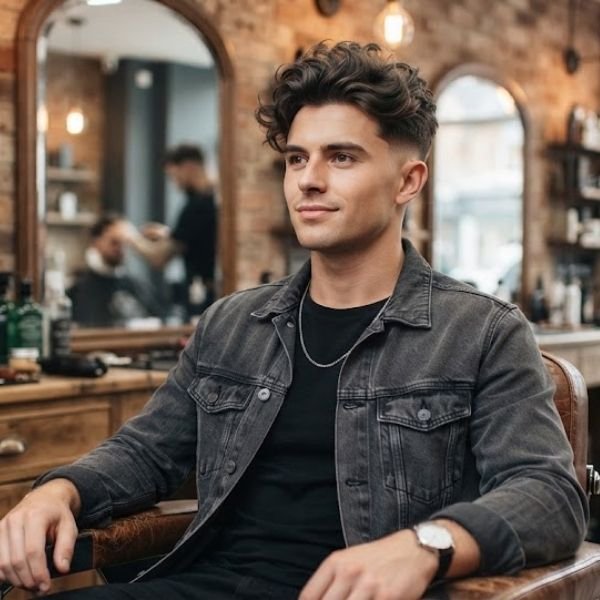
Waves and messiness go hand in hand, and this combination softens the structure of a traditional quiff into something more effortless. The low taper keeps the sides neat without competing with the textured top, making it a good fit for casual, everyday environments.
Natural Quiff with High Fade
Here, the top is left closer to its natural texture and volume rather than heavily styled, while a high fade does the heavy lifting for contrast. It’s a lower-maintenance option for men who don’t want to spend much time each morning shaping the front section.
Undercut Quiff
An undercut shaves or closely clips the sides and back while leaving the top notably longer, creating one of the sharpest contrasts on this list. Combined with a quiff, the long top gets swept up and back, resulting in a bold, edgy silhouette that suits thick or wavy hair especially well.
Youthful Short Quiff with Drop Fade and Beard
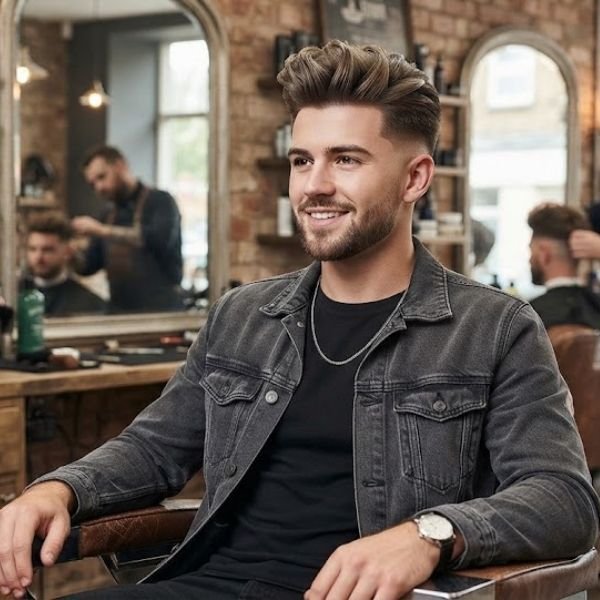
A drop fade curves downward behind the ear instead of staying level, adding a modern twist to a standard fade. Paired with a short quiff and a trimmed beard, this combination reads as fresh and current, popular with younger men who want a defined but not overly formal look.
Textured Quiff with Sharp Fade
A sharp, crisp fade line contrasts against a loosely textured top, giving this style precision where it matters and casual movement everywhere else. Barbers usually create the sharp line with a straight razor for clean edges around the hairline and ears.
Edgy Blonde Quiff
Lightening the top through bleach or balayage-style highlights adds another layer of contrast on top of the usual length and fade contrast. It’s a commitment, since blonde requires regular touch-ups and a purple shampoo to keep brassiness under control, but it makes a subtle cut stand out.
Long Quiff Fade
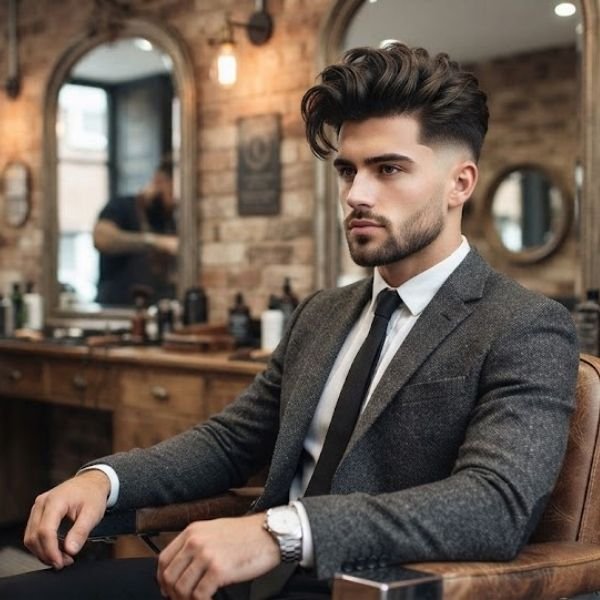
This pairs a dramatically longer top with closely faded sides, maximizing the visual gap between the two sections. It takes longer to style each morning, usually with a blow dryer and round brush for lift, but the payoff is a strong, statement-making silhouette.
Straight Smooth Quiff with Mid Skin Fade
For men with naturally straight hair, this version skips the texture and messiness in favor of a smooth, glass-like finish on top. A mid skin fade adds contrast without being as dramatic as a high fade, keeping the overall look polished and office-appropriate.
Curly Quiff
Curly hair adds natural lift, which means less product and less time spent trying to create volume from scratch. The curls are usually left longer on top and shorter on the sides, with a curl-defining cream used sparingly to enhance the natural pattern instead of weighing it down.
Pompadour Quiff
Blending two classic styles, this version borrows the pompadour’s height and rounded shape at the front while keeping the quiff’s softer, less rigid finish through the rest of the top. It suits men who want more drama than a standard quiff but aren’t ready for a full pompadour’s structured maintenance.
Textured Fringe Quiff
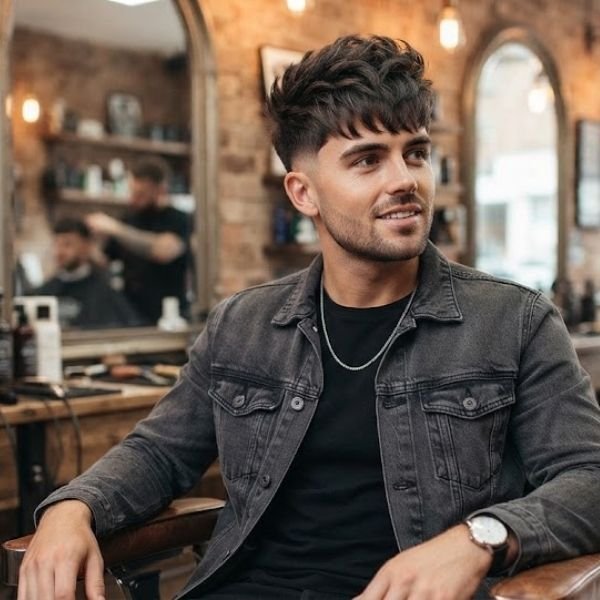
This hybrid brings the front-covering length of a fringe together with the upward lift of a quiff. The result is choppy, separated strands that fall forward at the tips while still rising off the forehead at the root, giving a tousled, lived-in look that works well with medium-length hair.
Disconnected Quiff
A disconnected quiff creates a visible break between the length on top and the sides, often through an undercut or heavy contrast fade rather than a gradual blend. This gives barbers more creative freedom with the top section, since it doesn’t need to transition smoothly into the sides.
What Is A Quiff Haircut?
A quiff is a men’s hairstyle where the front section of hair is grown longer, then brushed or blow-dried upward and slightly back, while the sides and back are cut shorter for contrast. The name comes from the word “coiffure,” and the style traces back to the 1950s, when rockabilly icons like Elvis Presley and actors like James Dean popularized the swept-up look. It saw a major revival in the 2000s and 2010s thanks to celebrities like David Beckham, and it has remained a barbershop staple ever since.
Quiff vs pompadour: The two are often confused, but a pompadour is styled with more height, a rounded shape, and a sleeker, more polished finish. A quiff is generally more relaxed, with the hair pushed upward and slightly forward rather than swept straight back.
Quiff vs fringe: A fringe hangs flat down over the forehead with little to no volume. A quiff does the opposite, lifting the front section up and away from the forehead, which is the main reason the two styles look so different despite both focusing on the front hairline.
Best hair types for a quiff:
- Straight hair: creates a sleek, defined shape with minimal frizz.
- Wavy hair: adds natural texture and movement without extra product.
- Curly hair: provides built-in volume and height at the root.
- Thick hair: holds the shape well but may need a fade to reduce bulk on the sides.
- Fine hair: can achieve height with the help of a volumizing mousse and blow-dry technique.
Face shapes that suit a quiff:
- Oval faces: suit nearly every quiff variation without adjustment.
- Round faces: benefit from added height and shorter sides to elongate the face.
- Square faces: pair well with textured or wavy quiffs that soften strong jawlines.
- Long or rectangular faces: look best with shorter, lower-volume quiffs to avoid adding extra length.
Final Thought
The quiff has lasted this long because it bends to whatever look you’re going for, sharp and formal, relaxed and messy, or somewhere in between. With 28 variations to choose from, there’s a version here for straight hair, curly hair, thick hair, and every fade height in between. The easiest way to land on the right one is to bring a photo to your barber, mention your hair type and how much time you’re willing to spend styling it each morning, and let them adjust the details from there.
FAQs About Quiff Hairstyle Men
What do I tell my barber for a quiff?
Ask for short sides with a fade or taper of your choice, keeping enough length on top to brush upward and back. Mention your hair type and preferred maintenance level so they can adjust the cut.
What is the difference between fringe and quiff?
A fringe falls flat over the forehead, while a quiff is styled upward and back, creating height and volume at the front instead of coverage.
What face shape is a quiff for?
Oval faces suit almost any quiff, while round and square faces benefit from added height, and longer faces look best with shorter, lower-volume versions.
Is quiff attractive?
Yes, the quiff is widely considered one of the more attractive and versatile men’s hairstyles, since it adds structure and height while still looking natural and easy to wear.
What is a modern quiff haircut?
A modern quiff uses a softer, more relaxed silhouette than the classic vintage version, often paired with a tapered or faded side rather than a sharply combed, high-shine finish.