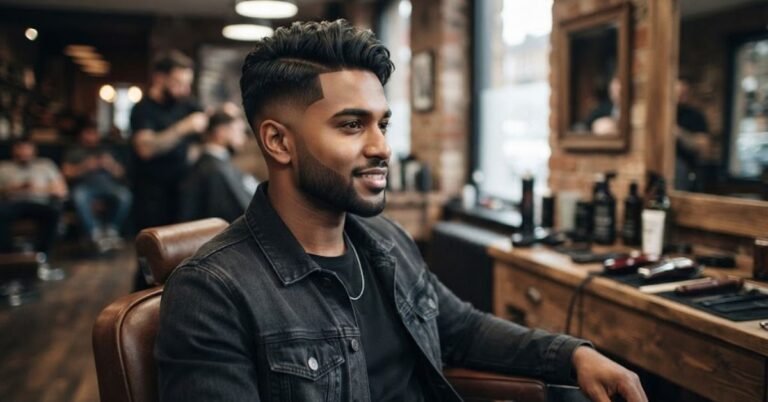
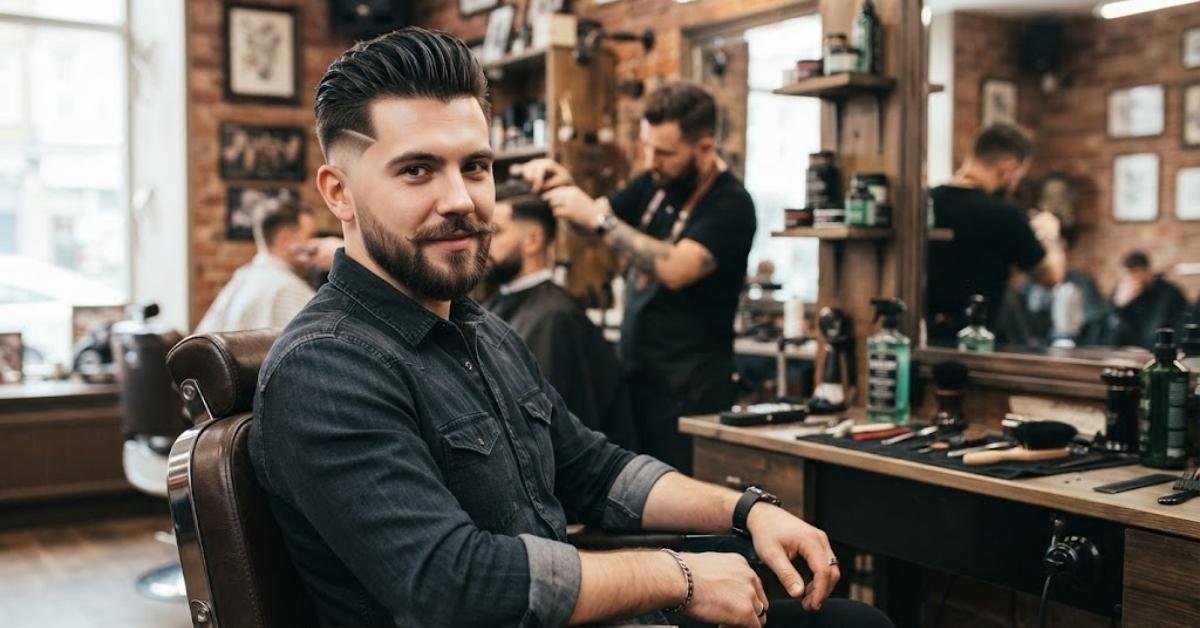
22 Burst Fade Slick Back Haircut Ideas for Men in 2026
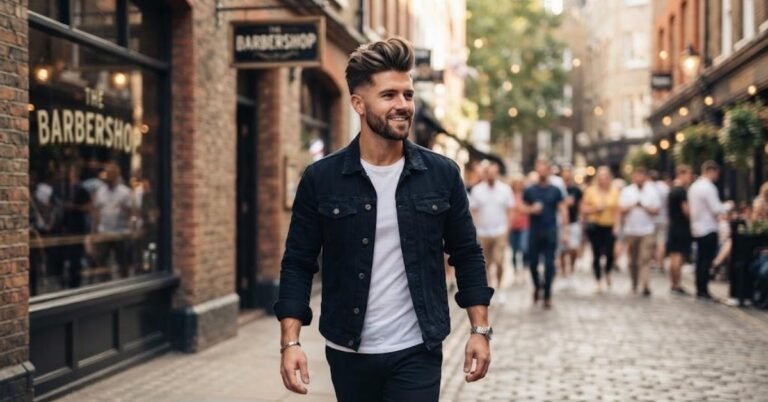
A burst fade slick back is one of those haircuts that looks effortless in a photo and takes real skill to execute in the chair. The curved fade around the ear does the heavy lifting on the sides, while the slicked-back top adds height, shine, and a bit of old-school polish. It’s sharp enough for the office, relaxed enough for a night out, and it works on nearly every hair type from pin-straight to tightly curled.
This guide walks through 22 variations of the style, breaks down which one suits your face shape and hair texture, and covers exactly what to say to your barber so you walk out with the cut you pictured. You’ll also find a step-by-step styling routine, product recommendations, and answers to the questions men ask most about this haircut before booking an appointment.
What Is a Burst Fade Slick Back Haircut?
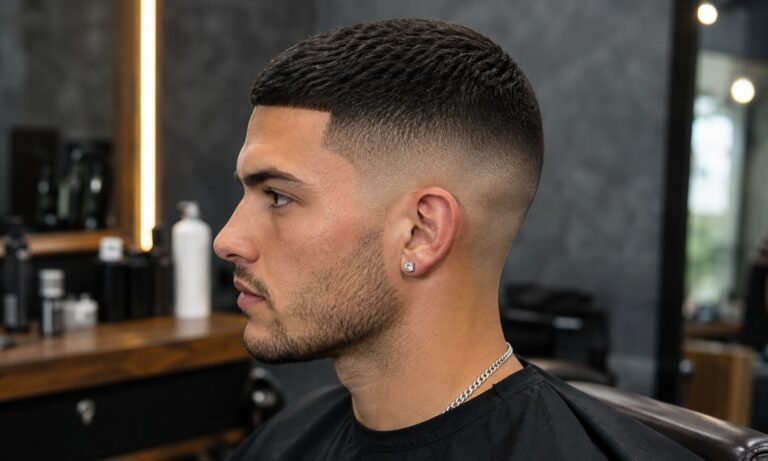
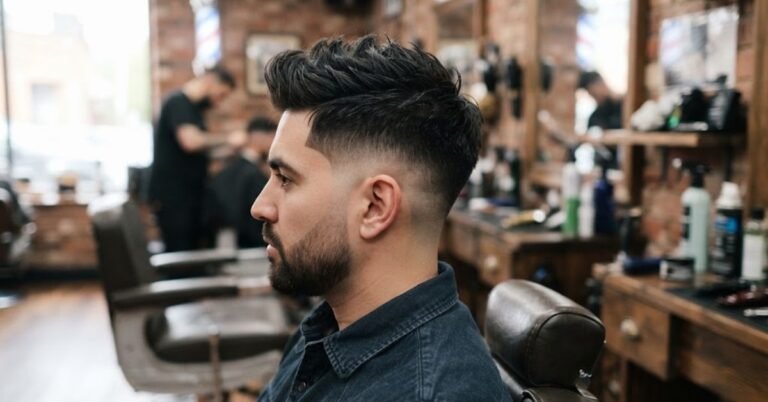
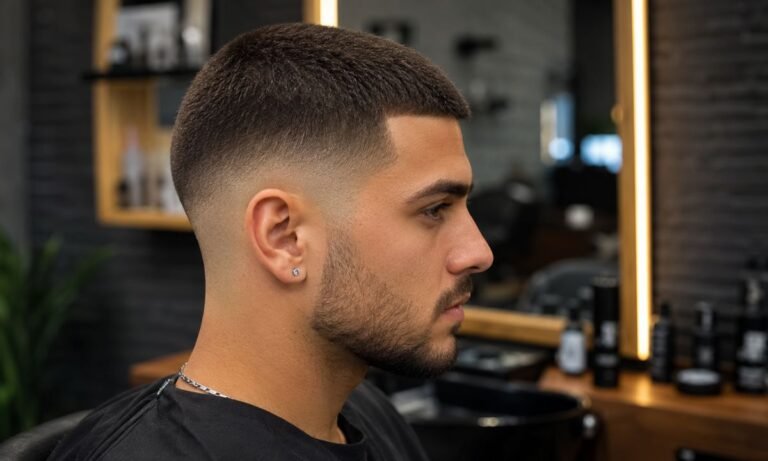
A burst fade slick back haircut pairs a semicircular fade that curves tightly around the ear with hair on top that’s combed straight back and away from the forehead. Instead of fading all the way around the head like a standard skin or taper fade, the burst fade “bursts” outward from a single point near the ear, leaving more length at the back of the head.
That shape creates a natural frame for the slicked-back top, which is usually styled with a strong-hold pomade or gel to build shine, direction, and lift. The result is a cut that reads as tidy from the front and detailed from the side, which is why it’s become a favorite among barbers who want to show off precision work without going overboard on texture or design.
Because the fade only wraps around the ear rather than the entire perimeter, a burst fade also tends to grow out more gracefully than a full fade, which matters if you’re not able to get to the barbershop every two weeks.
22 Best Burst Fade Slick Back Haircut Ideas for Men in 2026
Below are 22 ways to wear this haircut in 2026, organized by fade height, hair type, length, and finishing style. Use these as a starting point, then adjust the details to match your own hair density and face shape.
1. Classic Burst Fade Slick Back
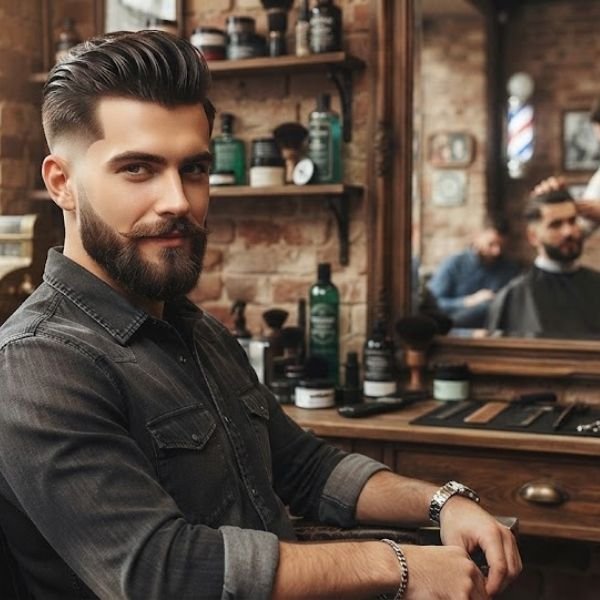
The classic version keeps the fade at a moderate height and finishes the top with a smooth, glossy comb-back. It’s the safest entry point if you’ve never had a burst fade before, since it doesn’t lean too hard into any one extreme. Medium-hold pomade is usually enough to hold this shape through a full workday.
2. Low Burst Fade Slick Back
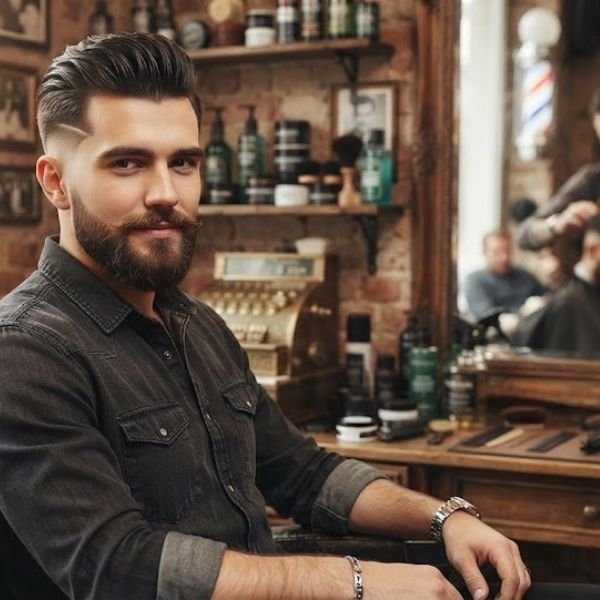
A low burst fade starts just above the ear, leaving more hair on the sides for a subtler transition. This version is a good fit for first-time fade clients or anyone in a conservative workplace, since the contrast between the sides and the top is gentle rather than dramatic.
3. Mid Burst Fade Slick Back
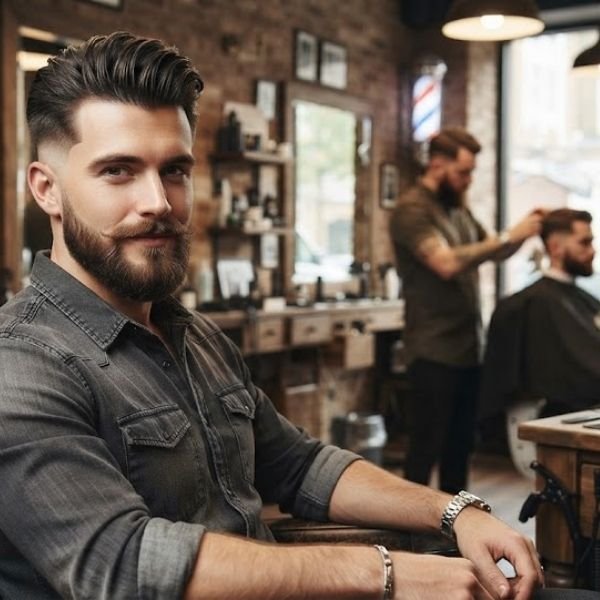
The mid burst fade begins around the temple, splitting the difference between subtle and bold. It’s the most requested height because it flatters nearly every face shape and pairs well with almost any top length, which is why most barbers default to it when a client just says “give me a burst fade.”
4. High Burst Fade Slick Back
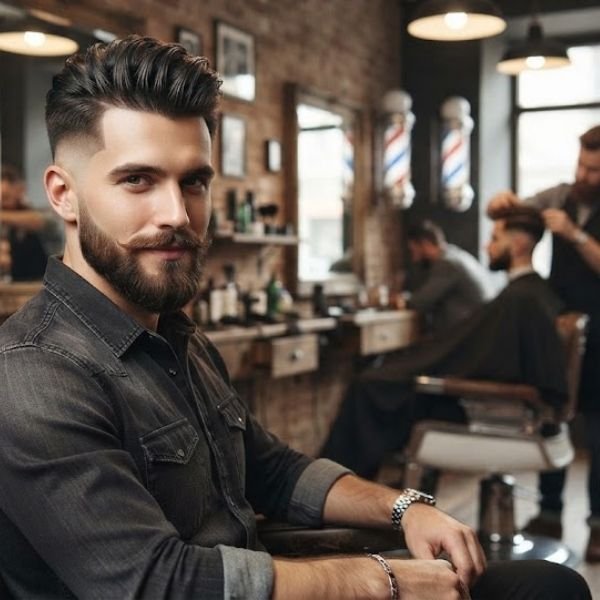
A high burst fade climbs closer to the crown, leaving very little hair on the sides. That extra contrast makes the slicked-back top look taller and more sculpted, since there’s less visual competition from the sides. This one reads best on men who want a sharper, more aggressive silhouette.
5. Skin Burst Fade Slick Back
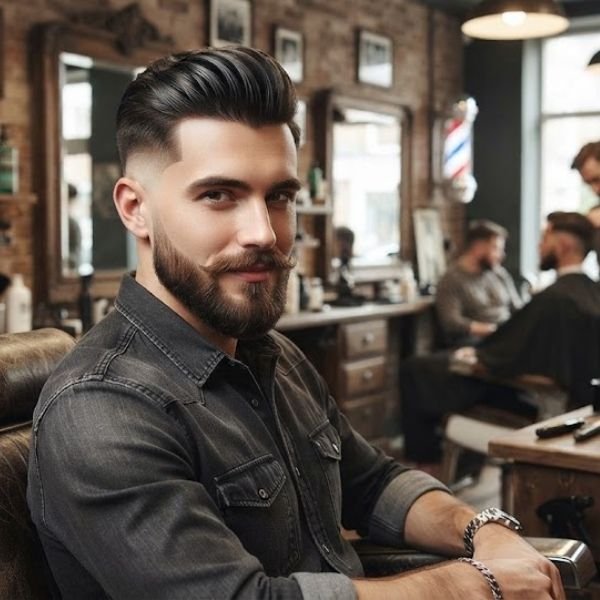
This version takes the fade all the way down to bare skin around the ear, with no visible stubble at the shortest point. The clean finish makes the gradient into the longer top look even crisper, and it tends to draw the most attention in photos.
6. Taper Burst Fade Slick Back
A taper burst fade keeps a little more length at the bottom of the fade instead of dropping to skin, which softens the transition and requires slightly less frequent touch-ups. It’s a good compromise for guys who like the shape of a burst fade but don’t want the maintenance of a skin fade.
7. Textured Burst Fade Slick Back
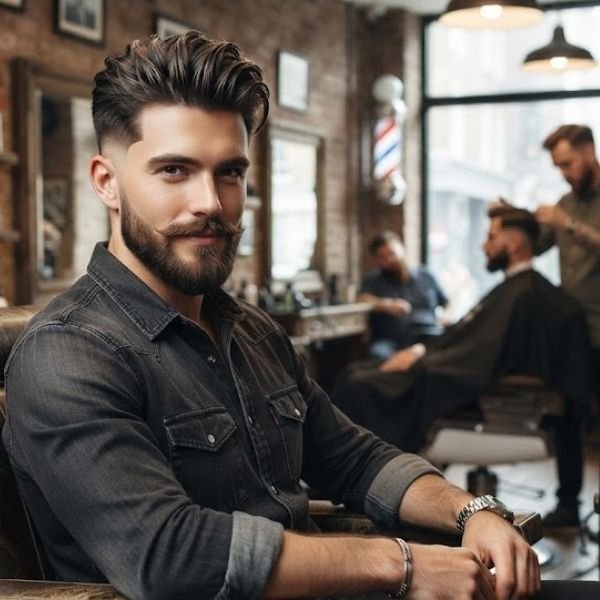
Instead of a glassy, wet-look finish, the textured version uses a matte clay or paste to keep some separation and movement in the top while still directing it backward. It looks less formal and works well for casual, everyday wear.
8. Long Hair Slick Back Burst Fade
Longer top hair, usually three inches or more, gives you more to work with when building height and volume in the slick back. This variation needs a stronger hold product and a bit more blow-drying to keep flyaways under control.
9. Short Slick Back Burst Fade
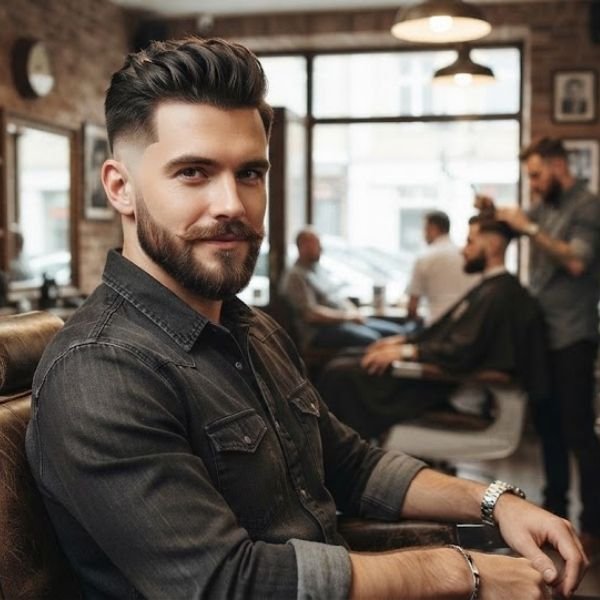
On the opposite end, a short top (around an inch to an inch and a half) creates a tighter, closer-to-the-scalp slick back. It’s lower maintenance day to day and grows out more evenly than the longer versions.
10. Wavy Slick Back Burst Fade
Natural waves add texture and dimension to the top instead of a completely flat surface. A lightweight styling cream tends to work better than heavy gel here, since it lets the wave pattern show through the slicked-back shape.
11. Curly Slick Back Burst Fade
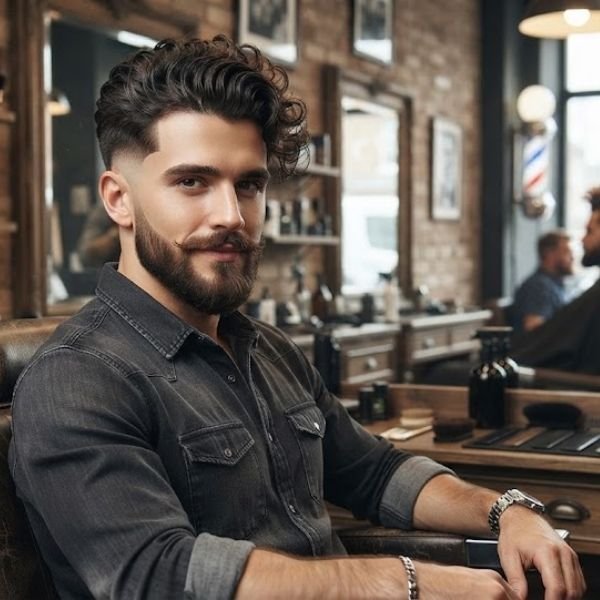
Curly hair can absolutely be slicked back, though it usually takes a curl-defining cream applied to damp hair, followed by a comb-through while drying. The burst fade’s rounded shape actually complements the curl pattern on top nicely.
12. Thick Hair Slick Back Burst Fade
Thick hair holds a slicked-back shape well and can support more height, but it also needs a stronger hold product to keep it in place all day. A pomade with firm hold and a light shine is usually the best match.
13. Thin Hair Slick Back Burst Fade
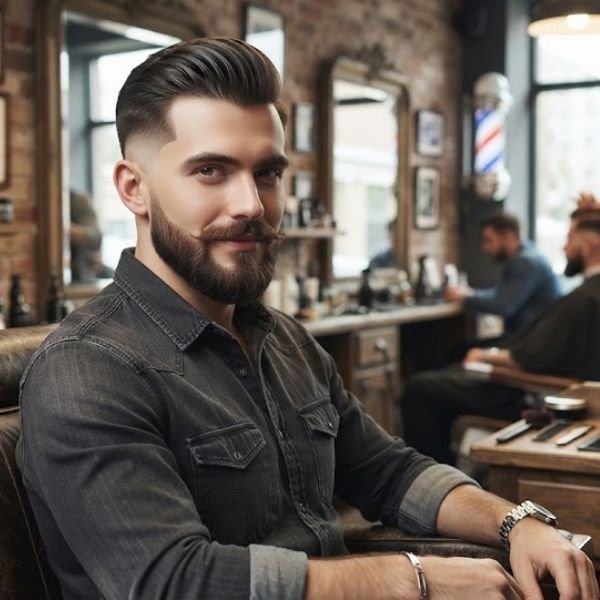
Fine or thin hair benefits from a lighter product and a shorter overall length on top, since too much weight from heavy gel can flatten the style. A volumizing pre-styling spray before the pomade goes a long way here.
14. Pompadour Slick Back Burst Fade
This variation adds extra height and a rounded shape at the front before the hair transitions into a slicked-back finish toward the crown. It’s a bolder, more retro-leaning take on the standard slick back.
15. Undercut Slick Back Burst Fade
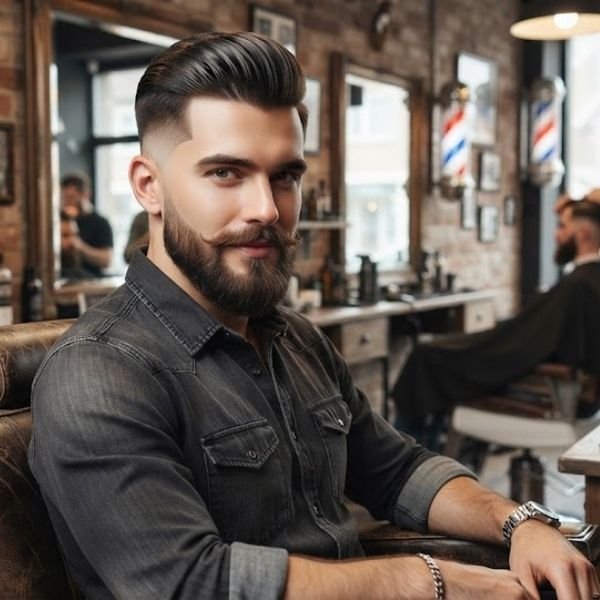
Pairing an undercut with a burst fade means the sides are cut very short and disconnected in feel from the top, even though the burst fade still blends around the ear. The look creates extra contrast and works well with longer top lengths.
16. Beard Blend Burst Fade Slick Back
Here, the fade on the sides blends directly into a well-groomed beard, creating one continuous, tapered line from the sideburn down to the jaw. Barbers usually need to know about your beard before they start the fade so the two pieces line up.
17. Messy Slick Back Burst Fade
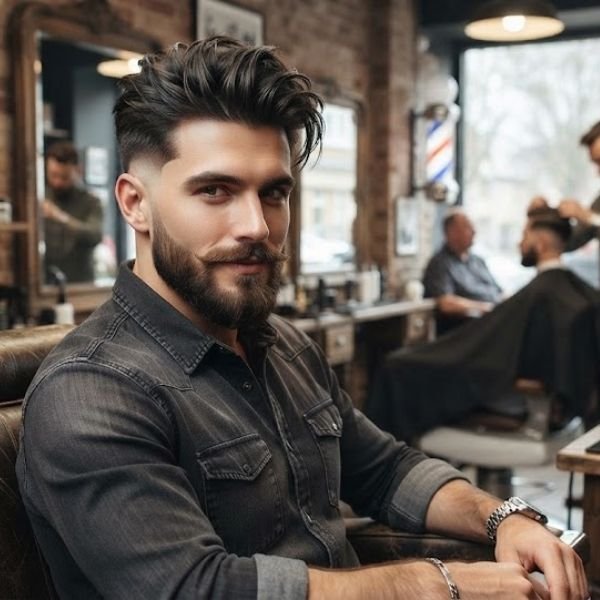
A looser, less polished version of the slick back that uses fingers instead of a comb to push the hair back, leaving some pieces separated. It keeps the shape of the style without the formal, glossy finish.
18. Wet Look Slick Back Burst Fade
This is the high-shine, glass-like finish most people picture when they hear “slick back.” It relies on a strong gel or water-based pomade applied to damp hair and combed through until every strand sits in place.
19. Side Part Slick Back Burst Fade
Adding a defined side part before slicking the rest of the hair back gives the style a more structured, dressed-up appearance. It’s a popular choice for weddings, interviews, and other formal occasions.
20. Razor Line Burst Fade Slick Back
A single razor line etched into the fade or along the part adds a sharp graphic detail without going as far as a full hair design. It’s a subtle way to make the cut feel more custom.
21. Slick Back Mullet Burst Fade
Combining a mullet with a burst fade means the back is left noticeably longer than the sides and top, while the front and crown are slicked back. It’s one of the more fashion-forward takes on the style and has picked up momentum with younger clients.
22. Professional Executive Slick Back Fade
Built for the boardroom, this version keeps the fade low to moderate, the top a moderate length, and the finish neat rather than glossy. It’s the most conservative option on this list and the easiest to maintain between haircuts.
Why Burst Fade Slick Back Haircuts Are Trending in 2026
Modern and Professional Appearance
The rounded fade line looks intentional and tailored rather than harsh, which is part of why this cut reads as polished in professional settings. Combined with a neat, slicked-back top, it hits a middle ground between a buttoned-up corporate haircut and something with a bit more personality.
Works with Different Hair Types
Straight, wavy, curly, thick, and thin hair can all be shaped into a slicked-back top, which isn’t true of every trending style. That flexibility is a big reason barbers recommend it to a wide range of clients rather than just one hair type.
Suitable for Casual and Formal Styles
Because the top length and finish (wet look versus matte, glossy versus messy) can be adjusted without touching the fade itself, one haircut can serve two purposes. A quick change in product turns the same cut from office-ready to weekend-casual.
Popular in Modern Men’s Grooming
Grooming trends in 2026 continue to favor cuts that photograph well and hold their shape between barber visits, and the burst fade slick back checks both boxes. Its rise in barbershop portfolios and social media tutorials reflects a broader shift toward detailed fade work paired with classic, low-fuss top styles.
Who Should Get a Burst Fade Slick Back Haircut?
Best Hair Types for This Style
Straight and wavy hair slick back most easily with minimal product, while thick and curly hair can also achieve the look with the right cream or gel and a bit more drying time. Very short or extremely fine hair can still work but usually needs a slightly longer top to give the style something to hold onto.
Best Age Groups
This haircut isn’t limited to one age bracket. Younger men tend to gravitate toward higher fades and longer, more textured tops, while older men often prefer a low or mid fade with a shorter, more conservative slick back.
Professional vs Casual Wearers
Office workers and anyone in a client-facing role usually do best with a low or mid fade and a smooth, moderate-length top. Creatives, students, and anyone with more flexibility in their dress code have room to experiment with higher fades, longer tops, and bolder finishes like the mullet or messy variations.
Who Should Avoid This Haircut?
Men with very thin, receding hairlines may want to avoid a high-contrast, high burst fade, since the sharp line can draw extra attention to the hairline. If your scalp is visible through very fine hair, a lower fade height with softer blending is usually a better fit.
How to Choose the Right Burst Fade Slick Back for Your Face Shape
Best Styles for Oval Faces
Oval faces are the most versatile shape for this haircut, since nearly every fade height and top length looks balanced. If you have an oval face, you have the freedom to choose based on personal style rather than trying to correct proportions.
Best Styles for Round Faces
A higher burst fade with added height on top helps elongate a round face and creates the appearance of sharper angles. Keeping the sides tighter and the crown taller is the key adjustment here.
Best Styles for Square Faces
Square faces already have strong, angular bone structure, so a mid fade with a slightly softer, less severe top works well without adding unnecessary sharpness. A textured or wavy slick back can soften the jawline nicely.
Best Styles for Diamond Face Shapes
Diamond faces, which are widest at the cheekbones, benefit from a bit of volume at the temples to balance that width. A mid or low burst fade with a fuller top, rather than a very tight or high fade, tends to look the most proportional.
How to Ask Your Barber for a Burst Fade Slick Back
Key Terms to Use at the Barber Shop
Say “burst fade” specifically rather than just “fade,” since the two create different shapes on the sides. From there, specify the height (low, mid, or high), whether you want the fade taken to skin or left with a guard number, and how you want the top finished (glossy slick back, textured slick back, or messy).
Showing Reference Photos
Bring two or three photos that show the front, side, and back of the style you want. A photo removes any ambiguity around terms like “high fade” or “sharp taper,” which can mean different things depending on the barber.
Choosing the Right Fade Height
If you’re unsure, a mid burst fade is the safest starting point since it suits most face shapes and hair types. You can always go shorter on your next visit once you’ve seen how the mid height looks on you.
Deciding on Hair Length and Texture
Decide roughly how much length you want on top before you sit down, whether that’s a short, low-maintenance option or a longer length for more styling flexibility. Mention your natural texture (straight, wavy, or curly) so your barber can cut it in a way that works with your hair rather than against it.
Step-by-Step Tutorial: How to Style a Burst Fade Slick Back Haircut
Step 1 – Start with Clean, Damp Hair
Wash your hair and towel-dry it until it’s damp but not dripping. Starting with clean hair helps styling products grip properly instead of sliding off oily strands.
Step 2 – Apply a Pre-Styling Product
Work a small amount of pre-styling cream, mousse, or heat protectant through damp hair. This step adds a base of hold and makes the next steps easier, especially if your hair is fine or hard to control.
Step 3 – Blow Dry Hair Backward
Using a comb or brush, direct the hair backward and away from your forehead while blow-drying on a medium heat setting. This trains the hair to lie in the direction you want before any heavier product goes in.
Step 4 – Apply Your Styling Product
Warm a coin-sized amount of pomade, gel, or clay between your palms and work it evenly through the hair, focusing on the roots first for lift, then through the lengths for hold and shine.
Step 5 – Shape the Slick Back
Comb the hair straight back from the hairline, then use your fingers to build a bit of height and volume at the crown so the style doesn’t look flat. Adjust the part or texture at this stage if you’re going for a side part or messy finish.
Step 6 – Finish and Set the Style
Let the style set for a minute or two without touching it, then add a light hairspray if you want extra hold through the day. Check the fade line in a mirror to make sure the transition still looks clean.
Best Hair Products for a Burst Fade Slick Back
Pomade vs Wax vs Clay
Pomade gives the classic glossy, wet-look finish and strong hold, making it the go-to choice for most slick back styles. Wax offers a lower shine and moderate hold, while clay delivers a matte finish with more texture, which suits the messier or more casual variations on this list.
Best Products for Fine Hair
Look for a lightweight, water-based pomade or a volumizing spray that adds body without weighing the hair down. Heavy oil-based products tend to flatten fine hair rather than lift it.
Best Products for Thick Hair
Thick hair usually needs a firmer-hold pomade or wax to keep it in place, since lighter products can get overpowered by the hair’s natural weight and volume.
Best Products for Curly Hair
A curl cream or styling gel with slip helps detangle and shape curls while they’re being combed back, without stripping their natural pattern. Applying product to soaking-wet hair, then drying with a diffuser, tends to give the cleanest result.
Best Products for Strong Hold
For all-day hold, especially with longer top lengths, a strong or extra-firm pomade paired with a light finishing spray is the most reliable combination.
Burst Fade Slick Back Maintenance Tips
Get Regular Fade Touch-Ups
Burst fades grow out faster than the top of the haircut, so plan on a touch-up every two to four weeks depending on how quickly your hair grows and how sharp you want the line to stay.
Style Your Hair Consistently
Styling the same way each day trains your hair to hold the shape more easily over time, which means less product and less effort as the style matures.
Maintain a Healthy Hair Care Routine
Regular washing, conditioning, and the occasional deep-conditioning treatment keep the hair on top healthy enough to hold a shine and shape without looking dry or brittle.
Avoid Product Build-Up
Wash your hair thoroughly every few days with a clarifying shampoo to remove leftover pomade or gel, since build-up can make hair look dull and harder to style.
Protect Hair from Heat Damage
If you blow-dry daily, use a heat protectant spray and keep the dryer on a medium setting rather than the highest heat, especially if you color or chemically treat your hair.
Keep the Beard Groomed
If your fade blends into a beard, keep both trimmed on the same schedule so the transition between them stays clean rather than growing out unevenly.
Common Mistakes to Avoid
Ignoring Hair Texture
Trying to force a style that fights your natural texture, like a completely flat wet look on very curly hair, usually leads to frustration and a shorter-lasting style. Work with your texture rather than against it.
Skipping Regular Trims
Letting the fade grow out too long between visits blurs the line between the fade and the top, which is the main visual feature of this haircut. Stick to a consistent touch-up schedule.
Choosing the Wrong Fade Height
Picking a high fade because it looks bold in photos, without considering your face shape or hair density, can lead to a result that doesn’t suit you. Talk through the height with your barber before committing.
Burst Fade Slick Back vs Other Popular Hairstyles
Burst Fade Slick Back vs Comb Over
A comb over typically has a defined side part with hair swept to one side, while a burst fade slick back is combed straight backward with no part. The comb over tends to read as slightly more formal and traditional.
Burst Fade Slick Back vs Pompadour
A pompadour builds significant height and volume at the front, often with a rounded shape, while the slick back keeps the top flatter and more streamlined from front to back.
Burst Fade Slick Back vs Quiff
A quiff has more forward-leaning volume and texture at the front hairline, whereas the slick back directs everything backward and away from the face.
Burst Fade Slick Back vs Faux Hawk
A faux hawk narrows the top hair toward the center of the head for a mohawk-like shape, while a slick back keeps the top hair spread evenly and combed flat toward the back.
FAQs
What is a burst fade slick back haircut?
It’s a haircut that combines a semicircular burst fade around the ear with hair on top combed straight back for a sleek, polished finish.
How often should I get my burst fade touched up?
Most men need a touch-up every two to four weeks, since the fade grows out faster than the top.
Does a burst fade slick back work with curly hair?
Yes, curly hair can be slicked back using a curl cream or gel, though it takes more product and drying time than straight hair.
What products work best for a slick back finish?
A medium to strong hold pomade is the most common choice, with clay or wax as alternatives for a more matte, textured look.
Is a burst fade slick back suitable for the office?
Yes, a low or mid burst fade with a moderate-length, neatly finished top is one of the more professional-friendly variations of this haircut.
Can thin hair handle a slick back style?
Yes, though it’s best paired with a lighter, volumizing product and a shorter top length to avoid a flat appearance.
Conclusion
The burst fade slick back earns its popularity by being genuinely adaptable. The curved fade gives barbers room to show detail and precision, while the slicked-back top can be dressed up with a glossy pomade or dressed down with a matte clay, depending on the day. Whether you’re drawn to the low-maintenance classic version or something bolder like the mullet or high-fade variation, the key is matching the fade height and top length to your face shape and hair texture rather than copying a photo exactly. Bring a reference picture to your next appointment, be specific about the fade height and finish you want, and keep up with regular touch-ups to keep the line as sharp as the day you left the chair.