
Boys Mullet Haircut Guide 2026: Styles, Fades, and Care
The boys mullet haircut is no longer a throwback joke. It has grown into one of the most requested kids’ cuts of 2026, and for good reason. Short, tidy sides paired with a bit of length in the back give boys a style that looks sharp at school pickup and just as good on the soccer field an hour later.
If you are standing in a barbershop trying to explain what you want, or scrolling through photos hoping to find “the one,” this guide covers it all. You will find every popular variation, an age based care schedule, styling steps a kid can actually follow, and the exact phrases that get barbers to nail the cut on the first try.
What Is a Boys Modern Mullet
A boys modern mullet keeps the classic short front and long back idea, then updates it with cleaner lines and better blending. Instead of the flat, blunt shape people remember from decades past, today’s version usually includes a taper or fade on the sides, some texture on top, and a back section that tapers naturally into the neckline rather than stopping abruptly.
What makes this cut different from an old school mullet is the finishing work. Barbers now shape the crown, add movement with layers, and blend the sides so there is no harsh line between short and long. The result reads as intentional rather than accidental, which is exactly why it has stuck around for boys of nearly every age.
The modern mullet also works across hair types. Straight, wavy, curly, and coily hair can all carry the shape, since the cut is really about proportion (short up front, longer in back) rather than one specific texture.
How to Choose the Right Version
Not every mullet variation suits every kid. A few practical factors make the decision easier.
- Hair texture. Curly and coily hair holds shape and volume naturally, so it often needs less aggressive layering. Straight hair shows clean fade lines well but can look flat without any texture on top.
- Age. Younger boys generally do better with shorter, tidier versions that are easy to maintain and less likely to draw unwanted attention at school. Teens can usually handle bolder fades and more length in the back.
- Morning routine. If getting out the door on time is already a challenge, choose a shorter back and a soft taper. It requires almost no daily styling and grows out cleanly.
- School policy. Some schools are strict about length or shaved patterns. A classic or tapered mullet reads as neat, while a burst fade or mohawk mullet is a bolder choice better suited to relaxed dress codes.
- Activity level. Boys who play sports need sides that sit comfortably under a helmet or cap without bunching up. A close fade or taper handles this better than a heavily textured top.
- Face shape. Round faces usually benefit from added height and volume on top, while square or oval faces can carry almost any variation, including sharper fades.
Bring a reference photo if you have one, but stay open to your barber’s suggestions. A skilled barber will adjust the technique based on how the hair actually grows, not just how it looks in a picture.
The Best Boys Mullet Haircut Variations
Here are twelve of the most requested boys mullet haircut styles heading into 2026, along with who each one suits best.
1) Classic Boys Mullet
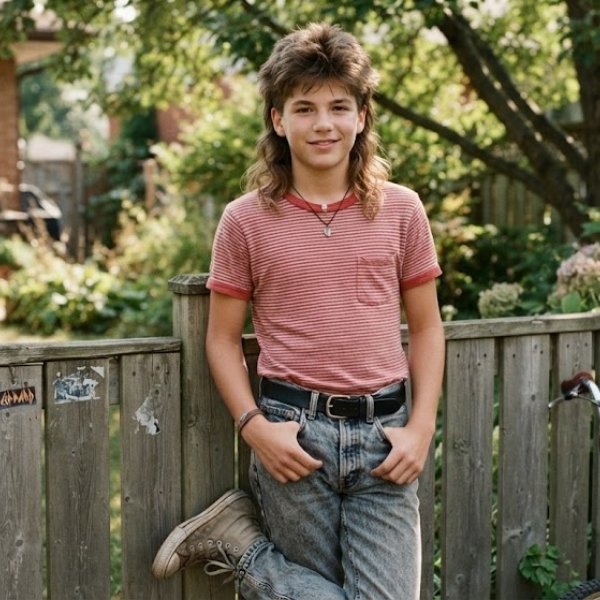
This is the original template every other version builds on. The sides stay tidy, the top gets light texture, and the back stops around the collar rather than growing out dramatically.
It is the safest starting point for a first mullet, works on straight, wavy, or curly hair, and rarely runs into trouble with school dress codes. If your son is unsure about committing to something bold, start here.
2) Boys Mullet Fade
Add a fade to the classic shape and you get one of the most popular boys haircuts right now. The sides taper down smoothly near the ear and blend upward, while the top stays fuller and the back holds its length.
This version suits straight and wavy hair especially well and adds the illusion of fullness to finer strands. Plan on a quick edge touch up every three to four weeks to keep the fade line sharp.
3) Short Mullet Haircut Boy

For families who like the shape but not the commitment, a shorter mullet keeps the back modest and the sides tapered or lightly faded. It grows out well between appointments, meets stricter school rules, and still reads as modern rather than old fashioned.
Fine or straight hair benefits most here, since the shorter length holds its shape with barely any product.
4) Curly Boys Modern Mullet
Curly hair and the mullet shape were made for each other. Soft layers in the back let the natural curl pattern breathe and move instead of clumping into one heavy mass. Leave the top slightly longer so the curl spring has room to show.
A pea sized amount of leave in conditioner or curl cream controls frizz without weighing the curls down. Skip the brush once it is dry and let the pattern do the work.
5) Boys Modern Mullet Straight Hair

Straight hair holds a cleaner, sharper line than any other texture, which makes this version look extra crisp. The trade off is that straight layers can look flat without some added texture.
A light texturizing spray worked through damp hair in the morning fixes that in under a minute and keeps the cut from looking one dimensional.
6) Tapered Modern Mullet Haircut Boy
Instead of a hard fade, this variation uses a soft taper that fades gradually rather than in one crisp line. It is a gentler look overall, grows out with far less visible regrowth line, and needs fewer trips back to the barber.
This is a strong pick for boys who want something a little more grown up than the classic cut but are not ready for a sharp fade.
7) Burst Fade Boys Mullet Haircut
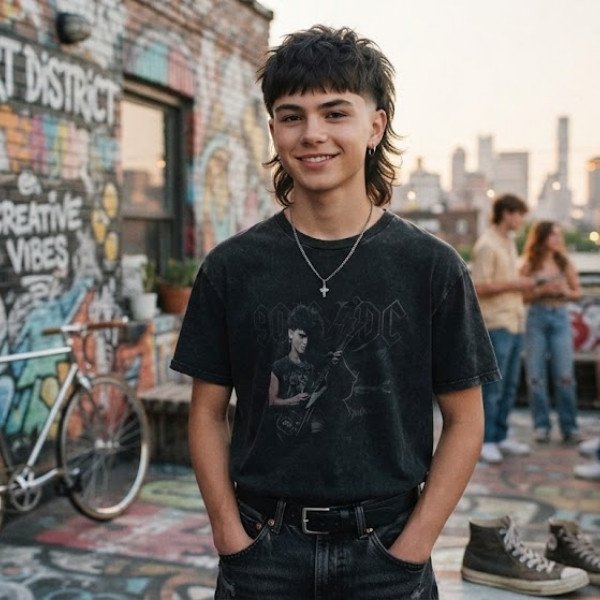
This is where the style gets more creative. A burst fade curves around the ear in an arc rather than a straight line, then flows directly into the longer back section.
Thick hair benefits the most from this technique, since the curved fade removes bulk exactly where it tends to build up. It has a custom, tailored look that signals real barber skill.
8) Sporty Medium Mullet
Built for boys who are always in motion, this version keeps the sides clean and short enough to sit comfortably under a helmet, cap, or headband. The back stays at a medium length, long enough to notice but not so long it gets in the way during practice.
It is genuinely one of the most low maintenance boys haircuts on this list, since the shorter overall profile holds up through sweat and repeated washing.
9) Wavy Surfer Mullet for Boys

This relaxed take leans into natural wave and movement rather than fighting it. The top stays a bit longer and tousled, the sides are lightly tapered, and the back has a loose, beachy flow instead of a defined edge.
A small amount of sea salt spray scrunched through damp hair enhances the wave pattern and gives it that effortless, just-back-from-the-beach texture.
10) Fringe Mullet
A longer front fringe sweeps forward and down, framing the face and softening a strong jawline, while the back tapers into the classic mullet length. It draws attention toward the eyes and works especially well on square or rectangular face shapes.
Blow drying the fringe forward each morning keeps the direction consistent, though it also holds up fine when left to air dry.
11) Low Fade Modern Mullet
A low fade places the sharpest contrast right near the ear, leaving more length above it for a gentler, more gradual blend into the top. It reads as polished without being loud, which makes it one of the more versatile variations on this list.
This style suits nearly every hair type and gives boys who want a bit of edge a way to get it without going too extreme.
12) Longer Back, School Safe
For boys who want more length without breaking a strict dress code, this version keeps the sides neatly tapered and the top controlled, while allowing the back to grow just past the collar. It looks tidy from the front, which is usually what school policies actually check for.
Expect a bit more detangling and brushing at this length, especially with wavy or curly hair.
Quick Age and Care Guide
| Age Group | Best Style Type | Trim Frequency |
| Toddlers (2 to 4) | Soft taper, minimal length gap | Every 6 to 8 weeks |
| Young kids (5 to 9) | Classic or short mullet | Every 4 to 6 weeks |
| Tweens (10 to 12) | Fade or textured crop | Every 3 to 5 weeks |
| Teens (13 to 17) | Burst fade, low fade, or longer back | Every 3 to 4 weeks |
Most barbers suggest waiting until a toddler’s hair has grown in thick and even, usually somewhere around age two or three, before attempting a fully defined mullet shape. Trying it too early can leave patchy or uneven results simply because there is not enough hair to work with yet.
Daily Styling That Kids Can Do
The mullet is popular with parents partly because most versions do not demand much daily effort. A simple routine works for nearly every hair type.
- Towel dry the hair until it is just damp, not soaking wet.
- Add a small, coin sized amount of light gel, texture cream, or sea salt spray depending on hair type.
- For curls or waves, scrunch gently upward using fingers rather than a brush.
- For straight hair, comb the top forward or to one side, then leave the back to fall naturally.
- Let the back section hang as is. There is rarely a need to style it separately.
Older kids and teens can usually handle this routine on their own within a week or two of practice, which is part of what makes the cut so practical for busy households.
Care and Upkeep
A low maintenance haircut still needs consistent attention to stay looking sharp. Left too long between trims, the shape starts to blur, especially around the neckline and the blend at the sides.
- Trim schedule. Fades and burst fades need touch ups every three to four weeks. Softer tapers and classic versions can usually stretch to five or six weeks.
- Washing. Two to three washes a week is typically enough. Washing daily can dry out hair and scalp, particularly for curly and coily textures.
- Products by texture. Curly hair does best with leave in conditioner or curl cream. Straight hair benefits from a light texturizing spray or matte clay. Wavy hair responds well to sea salt spray.
- Common mistakes to avoid. Skipping trims until the shape is completely gone, using heavy pomade on fine hair (it flattens rather than lifts), and brushing curly hair while dry, which breaks up the curl pattern and adds frizz.
- Growing it out. If a boy wants to transition away from the mullet later, ask the barber to blend the back length into the sides gradually over two or three visits instead of cutting it all off in one session. It avoids an awkward in between stage.
Barber Talk That Works
Walking in with the right words saves everyone time, especially with a chair full of a squirming kid and a limited attention span.
- For a classic request: “Keep the sides tight, add some length in the back, and blend it with a soft fade.”
- For texture on top: “Leave the top a bit choppy, nothing too clean or flat.”
- For a first fade on a younger child: “Soft taper only, nothing too sharp, this is his first fade.”
- For curly hair: “Cut with the curl pattern, not against it, and leave the top a little longer.”
- For straight hair: “Add texture through the top layers so it doesn’t sit flat.”
- For sports: “Keep the sides short enough to sit clean under a helmet.”
It also helps to know the basic difference between the two most common terms. A fade blends hair down to skin at some point along the side, creating sharp contrast and a bolder look, but it grows out faster and needs more frequent trims. A taper blends more gradually without reaching the skin, so it holds its shape longer and suits boys who cannot get to the barber as often.
Frequently Asked Questions
What age can a boy get a mullet haircut?
Most barbers recommend waiting until around age two or three, once hair has grown in thick enough to hold a defined shape. There is no upper age limit; the cut works well through the teen years too.
Does a mullet work on curly hair?
Yes. Curly and coily hair actually suit the mullet especially well, since the natural volume and movement complement the longer back section without extra styling effort.
How often does a boys mullet need to be trimmed?
Fades and burst fades need a touch up every three to four weeks, while softer tapers and classic versions can usually go five to six weeks between visits.
Will schools allow a mullet haircut?
Most schools accept classic or tapered mullets since they look neat from the front. Bolder versions like burst fades or mohawk mullets may run into stricter dress codes, so it is worth checking school policy first.
What is the difference between a mullet fade and a mullet taper?
A fade blends the sides down to skin for sharper contrast but needs more frequent trims. A taper blends gradually without reaching skin, holding its shape longer with less upkeep.
Is a mullet a good choice for thin or fine hair?
Yes, with the right cut. Shorter layers on top and a fade on the sides create the appearance of thickness, while heavy length anywhere tends to flatten fine hair fast.
Can a boy style his own mullet in the morning?
Most kids can manage it within a week or two of practice. The routine is usually just a damp comb through, a small amount of product, and letting the back fall naturally.
Conclusion
The boys mullet haircut has earned its place as one of the top picks for 2026 because it genuinely works for real life. It holds up at school, survives gym class and sports practice, and adapts to straight, wavy, curly, or coily hair without much fuss.
If your son is new to the style, start with a classic or tapered version and build confidence before moving to a bolder fade or fringe. Bring a reference photo, use the exact barber phrases above, and stick to a regular trim schedule. Do that, and the cut will look sharp through every season of the year, not just the first week after a fresh trim.