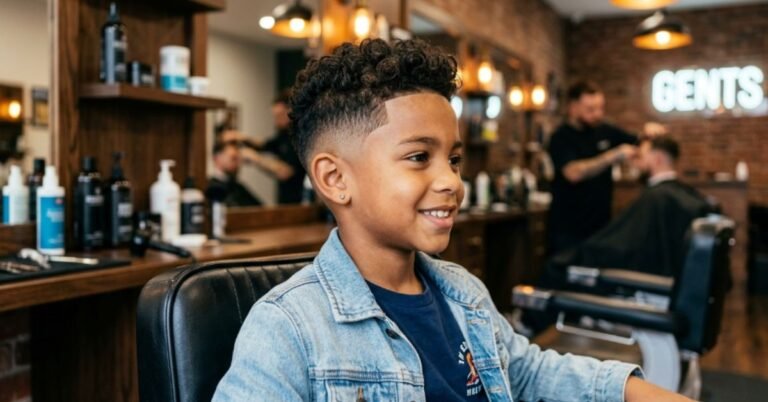
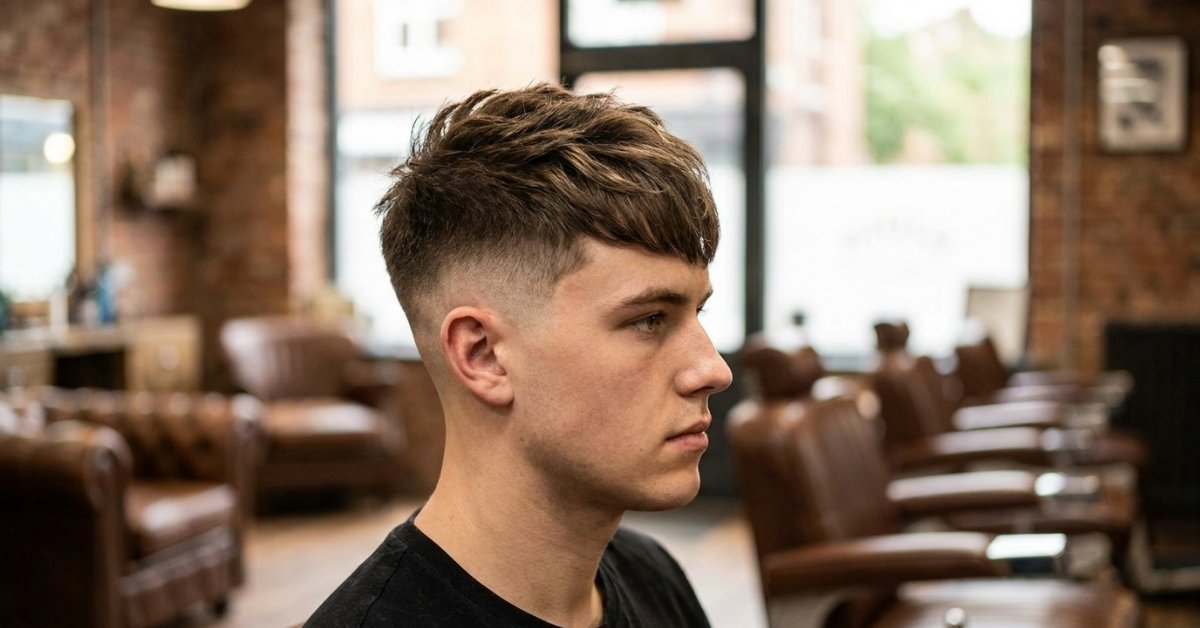
15 Best Burst Fade Fringe Haircuts for Men in 2026
Yes, a burst fade fringe is still one of the sharpest haircuts you can walk into 2026 with. It pairs a curved, semi circular fade around the ear with a soft, forward swept fringe on top. The result is a cut that looks structured up close but relaxed from a distance, which is exactly why barbers keep it on repeat.If you have been scrolling through photos wondering whether this style suits your hair type or face shape, you are not alone. Most guys asking about the burst fade fringe want the same three things.
They want a cut that is easy to style, one that grows out without looking messy, and one their barber will not butcher on the first try.This guide walks through all of that. You will find 15 trending variations, a barber conversation script, at home styling steps, product picks, and a maintenance plan. By the end, you will know exactly what to book and how to keep it looking fresh between visits.
What Is a Burst Fade Fringe Haircut?
A burst fade fringe combines a rounded fade that bursts around the ear with a fringe left long enough to fall over the forehead. It is not one single haircut. It is a fade technique paired with a top style, which is why it works on so many hair types.
Understanding the Burst Fade
A burst fade is a fade that curves around the ear instead of running in a straight horizontal line like a standard skin fade. The clipper work fans out in a semicircle, tapering tighter as it moves toward the hairline and sideburns. This curved shape is what gives the burst fade its name, since it looks like the fade is bursting outward from a single point near the ear.
Barbers usually build it in three stages. They start with a longer guard on top, move to shorter guards around the ear, and finish with a razor or trimmer for clean edges. The curve takes more skill than a straight fade, so it is worth booking with someone who has done it before.
What Is a Fringe Haircut?
A fringe is simply the section of hair left long at the front and brushed or styled forward over the forehead. Some people call it a French crop fringe when it is paired with tighter sides, though the fringe itself can sit on almost any base cut. Length can range from a short, barely there fringe to a longer curtain style that grazes the eyebrows.
The fringe is the part that gives this haircut its personality. Straight hair gives a sleek, structured fringe. Curly or wavy hair gives a textured fringe with natural movement that needs almost no product to look intentional.
Why Men Love This Combination
The burst fade fringe works because it balances two opposite ideas at once. The fade is sharp, precise, and high maintenance to cut but low maintenance to wear. The fringe is soft, relaxed, and gives the whole look a bit of personality that a plain fade does not have on its own.
It also photographs well, which matters more than people admit. The curved fade catches light differently than a straight fade, so it reads as more dynamic in photos and in person. That is a big reason it keeps trending across men’s haircuts 2026 searches.
Key Features of a Burst Fade Fringe
A few details separate a real burst fade fringe from a generic fade with long hair on top. Look for these when you are checking reference photos or judging your own cut.
- A visible curve around the ear rather than a flat, straight line
- A fringe with enough length to actually fall forward, usually 2 to 4 inches
- A clean, sharp hairline that frames the fringe
- Smooth blending between the longest and shortest sections with no harsh lines
Benefits of a Burst Fade Fringe Haircut
Beyond looking good, this cut earns its popularity through practical perks. It flatters more people than most trend cuts, and it does not demand a strict daily styling routine.
Modern and Stylish Look
The curved fade line alone makes this haircut feel current compared to a basic taper. It sits in that sweet spot between edgy and professional, which is why it shows up on everyone from office workers to athletes. Adding a fringe on top keeps it from looking like every other fade you see walking down the street.
Works for Different Hair Types
Straight, wavy, curly, and thick hair all take a burst fade fringe well, though the finished look shifts with each texture. Straight hair gives a sleeker, more controlled fringe. Curly hair adds volume and a natural, undone texture that many guys actually prefer.
Customizable for Every Face Shape
Because the fade height and fringe length are both adjustable, a barber can tailor this cut to soften angles or add width where needed. A longer fringe can shorten the look of a longer face. A higher fade can add height and balance to a rounder face.
Easy to Style and Maintain
Once the cut is dialed in, daily styling usually takes under five minutes. A small amount of product and a blow dryer or your fingers is often all you need. The sides stay neat on their own since the fade grows out gradually instead of collapsing into a shapeless mess.
15 Trendy Burst Fade Fringe Haircuts Every Man Should Try in 2026
Here are 15 ways to wear the burst fade fringe this year, from the classic version to bolder takes for thicker or curlier hair.
1. Classic Burst Fade Fringe
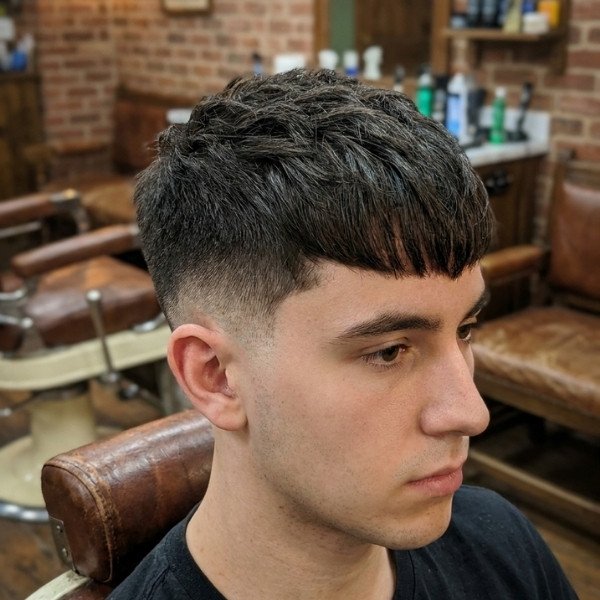
This is the baseline version, a mid burst fade with a fringe cut just above the eyebrows and brushed straight forward. It works for almost any hair type and is the easiest style to describe to a new barber. Clean, simple, and hard to get wrong.
2. Textured Burst Fade Fringe
Here the top is cut with a texturizing technique so individual pieces of the fringe stand apart instead of lying flat. A texture powder or matte clay brings out definition without adding shine. It suits guys who want movement without looking overly styled.
3. Curly Burst Fade Fringe
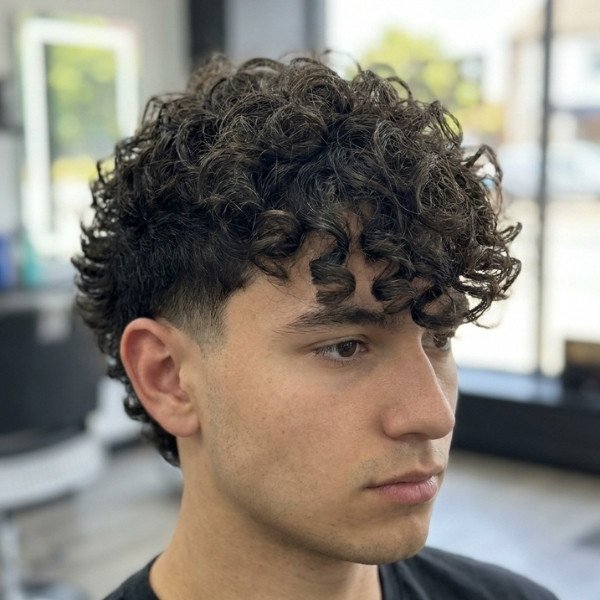
Natural curls are left longer on top and allowed to fall into a soft, curved fringe. The burst fade keeps the sides tight so the curls on top stay the focal point. This is one of the lowest maintenance options on this list since curls hold their shape with minimal product.
4. Messy Burst Fade Fringe
A deliberately undone fringe, styled with fingers instead of a comb for a lived in look. A sea salt spray or light paste adds grip without stiffness. Great for a casual, off duty vibe.
5. Short Fringe with Burst Fade
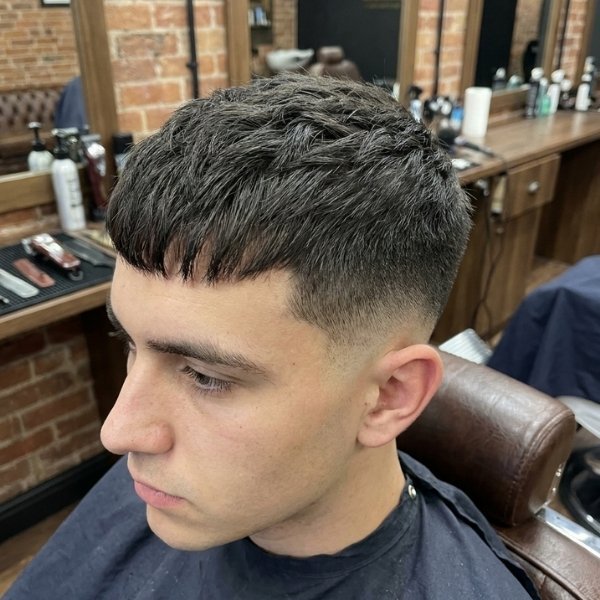
The fringe is trimmed close, just grazing the top of the forehead instead of falling over it. This version reads a bit more professional and needs less daily styling. A solid pick for a first time trying this cut.
6. Long Fringe Burst Fade
The opposite of the short version, with fringe length reaching down toward the eyebrows or slightly past them. This gives the most dramatic contrast against the tight burst fade underneath. It needs a bit more product to keep the length under control through the day.
7. Low Burst Fade Fringe
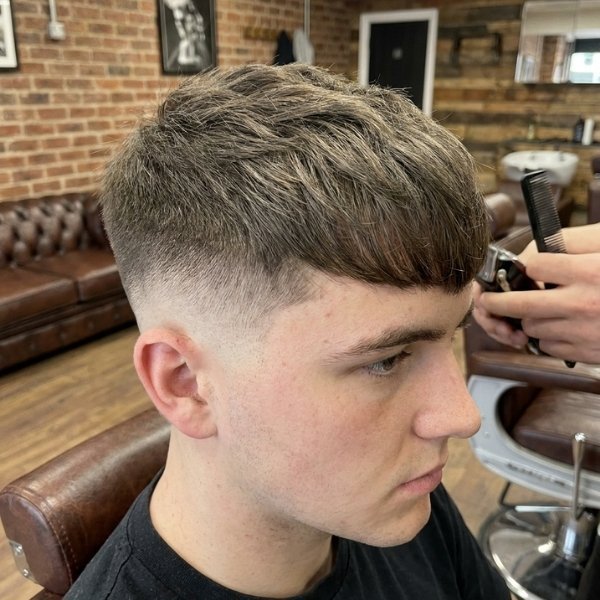
The fade starts low, close to the ear, keeping most of the head covered in longer hair. This is the most subtle and versatile fade height, and it works well for office settings. It also grows out the slowest, meaning fewer trips back to the barber.
8. Mid Burst Fade Fringe
A balance between low and high, starting around the temple. This is the most commonly requested height because it reads as bold without going overboard. It pairs well with almost any fringe length.
9. High Burst Fade Fringe
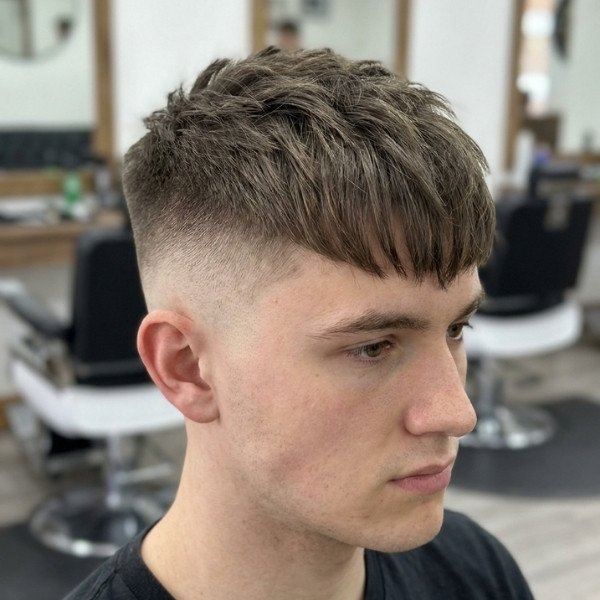
The fade starts high on the head, creating maximum contrast between the skin and the longer top. This version is the boldest and needs the most upkeep since regrowth shows fastest near the hairline. It suits guys who like a sharper, more aggressive silhouette.
10. Wavy Burst Fade Fringe
Natural waves are enhanced with a sea salt spray to add texture and a slight tousled finish to the fringe. The waves give the fringe natural movement that a straight blow dry cannot replicate. It sits between the polish of straight hair and the volume of curly hair.
11. Thick Hair Burst Fade Fringe
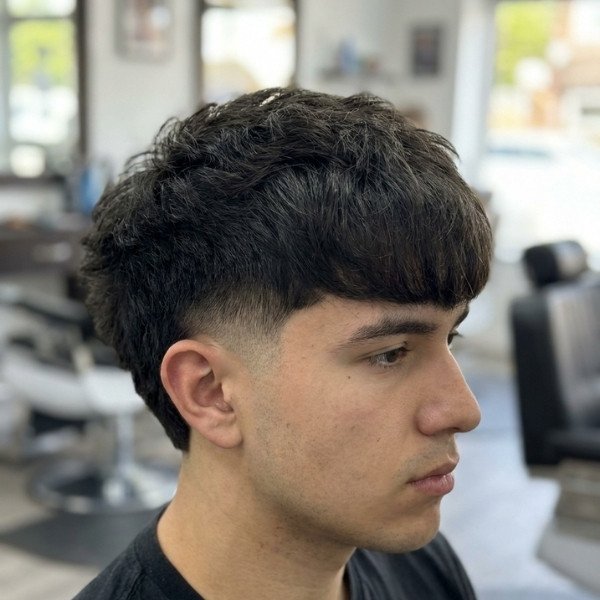
Thick hair is thinned slightly at the crown so the fringe does not sit too heavy or bulky. The burst fade also helps balance the volume on top by keeping the sides tight. Ask your barber about point cutting if your fringe feels too dense after the first trim.
12. Straight Hair Burst Fade Fringe
Straight hair gives the sleekest, most defined version of the fringe with minimal effort. A lightweight pomade or cream is usually enough to hold the shape all day. This variation looks the most polished of the 15 on this list.
13. French Crop Burst Fade Fringe
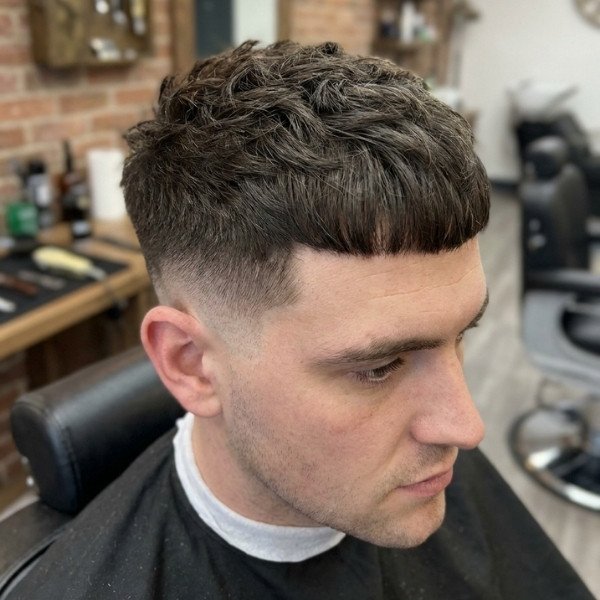
The French crop fringe is cut shorter and blunter across the front, giving a boxier, more structured shape than a standard fringe. It pairs naturally with a burst fade since both styles favor clean, sharp lines. This combination is one of the more requested cuts among the 15 styles here.
14. Tapered Burst Fade Fringe
A softer alternative to the skin tight burst fade, this version blends gradually instead of fading all the way to the skin. It suits guys who want the curved shape without the stark, high contrast look. It is also a bit more forgiving as it grows out between trims.
15. Modern Textured Fringe with Burst Fade
The final look on this list combines a heavily textured, piece defined fringe with a sharply cut burst fade for maximum contrast. Texture powder or clay is worked through damp hair before drying to lock in separation. It is the most editorial of the 15 styles and a strong pick if you want your cut to stand out.
How to Ask Your Barber for a Burst Fade Fringe
Knowing the right words to use in the chair makes a huge difference in the final result.
Step 1: Choose the Fade Height
Decide between a low, mid, or high burst fade before you sit down. A low fade is the safest starting point if this is your first time trying the style. Naming the height up front saves back and forth mid haircut.
Step 2: Decide the Fringe Length
Pick roughly how far you want the fringe to fall, whether that is above the brow, at the brow, or past it. Bring a rough measurement in mind, like the length of a finger, to make communication easier. Your barber can always trim more later, but they cannot add length back.
Step 3: Select Your Preferred Texture
Tell your barber whether you want a sleek, defined fringe or a textured, piece separated one. This affects how they cut the top, not just how you style it afterward. Texturizing shears create a different finish than a blunt scissor cut.
Step 4: Bring Reference Photos
A photo removes almost all ambiguity from the conversation. Try to bring two or three angles of the same style, including a close up of the fade and a front view of the fringe. This is especially useful for the curved shape of a burst fade, which is hard to describe in words alone.
Step 5: Discuss Maintenance Requirements
Ask how often you will need to come back based on the fade height you chose. A high burst fade needs touch ups roughly every 2 to 3 weeks, while a low fade can stretch to 4 or 5. This helps you pick a style that actually fits your schedule.
How to Style a Burst Fade Fringe at Home
Once you leave the barbershop, daily styling is what keeps the cut looking sharp.
Step 1: Wash and Towel Dry Your Hair
Start with clean hair since product grips better on hair that is not weighed down by oil. Towel dry until it is damp, not soaking wet. Too much water dilutes styling product and makes it harder to hold shape.
Step 2: Apply a Styling Product
Work a small amount of product, roughly a dime sized amount, through your palms first. Apply it evenly from roots to ends, focusing on the fringe section. It is easier to add more product than to fix hair that has too much.
Step 3: Blow Dry the Fringe Forward
Use a blow dryer on a low or medium heat setting and direct airflow forward and slightly down. A round brush helps if you want extra volume and a more polished finish. This step is what gives the fringe its shape and lasting hold.
Step 4: Add Texture and Volume
Once mostly dry, use your fingers to separate pieces of the fringe for a more textured look. A texture powder at the roots can boost volume if your hair sits flat. This step is optional if you prefer a sleeker, more combed finish.
Step 5: Finish and Set the Style
Lock everything in place with a light hold hairspray if you need extra staying power through the day. Check the fade sides briefly to make sure nothing needs a quick comb through. The whole routine should take under five minutes once you get used to it.
Best Hair Products for a Burst Fade Fringe
The right product depends on your hair type and how much hold or texture you want.
| Product | Best For | Finish |
| Matte clay | Thick or wavy hair | Natural, no shine |
| Texture powder | Fine or flat hair | Volume and grip |
| Sea salt spray | Wavy or curly hair | Beachy, undone texture |
| Lightweight pomade | Straight hair | Sleek, defined |
| Hair spray | Any hair type | Long lasting hold |
Matte Clay
Matte clay gives strong hold with zero shine, which suits guys who want their fringe to look natural rather than glossy. It works especially well on thick or wavy hair that needs help holding a shape. A little goes a long way, so start small.
Texture Powder
Texture powder is best for fine or naturally flat hair that struggles to hold volume. Sprinkle a small amount at the roots before styling and work it through with your fingers. It adds grip without the heaviness of a cream or clay.
Sea Salt Spray
Sea salt spray enhances natural texture, making it a favorite for wavy and curly burst fade fringes. Spray it on damp hair before air drying or diffusing for the most natural, undone look. It is not a strong hold product, so pair it with clay if you need more control.
Lightweight Pomade
Pomade gives a sleeker finish with a bit of shine, ideal for straight haired versions of this cut. Water based pomades are easier to wash out and restyle than old school oil based ones. Use sparingly since pomade can look greasy if overapplied.
Hair Spray
A light hold hairspray is the finishing step that locks your style in place for the day. It works well on top of any other product without adding weight or stiffness. Skip heavy formulas since they can make the fringe feel crunchy.
How to Maintain a Burst Fade Fringe Haircut
A great cut only stays great with a bit of routine care between barber visits.
Step 1: Schedule Regular Trims
Book your next appointment before the fade starts growing out and losing its shape. Most guys with this cut return every 2 to 4 weeks depending on fade height. Waiting too long means the barber has to redo more work each visit, not less.
Step 2: Keep the Fringe Clean
Wash your hair regularly to remove product buildup, which can make the fringe look dull or greasy over time. A clarifying shampoo once a week helps if you use styling products daily. Clean hair also holds product better, so this step actually saves you time styling.
Step 3: Use Quality Hair Products
Cheap products can flake, leave residue, or fail to hold through the day. Investing in a couple of solid staples, like a clay and a light hairspray, covers most styling needs. You do not need a huge collection, just the right two or three items.
Step 4: Avoid Heat Damage
Frequent blow drying on high heat can dry out the fringe and make it look brittle over time. Use a heat protectant spray if you style with hot tools daily. Letting hair air dry partially before blow drying also reduces overall heat exposure.
Step 5: Refresh the Fade Every Few Weeks
Even a low maintenance fade needs a touch up before it fully grows out. A quick line up between full haircuts can extend how long the style looks sharp. Many barbershops offer a faster, cheaper touch up service for exactly this purpose.
Who Should Get a Burst Fade Fringe?
This cut flatters a wide range of face shapes and hair types, though a few work especially well.
Best Face Shapes
Certain face shapes benefit the most from the balance this haircut provides.
Round Face Shape
A higher burst fade adds vertical height, which helps elongate a rounder face. Pair it with a longer fringe for extra contrast against the fullness of the cheeks. Avoid a very low fade, which can make the face look wider.
Square Face Shape
A softer, tapered burst fade works well here since it avoids adding more sharp angles to an already strong jawline. A textured, slightly messy fringe softens the overall look. This combination balances structure with a bit of relaxed texture.
Diamond Face Shape
A mid burst fade with a fringe that has some width helps balance out narrower cheekbones and forehead. This face shape can handle most fringe lengths without issue. Focus on keeping the fade curve smooth for the most flattering result.
Best Hair Types
Some hair types take to this cut with almost no extra effort.
Wavy Hair
Wavy hair gives the fringe natural texture and movement right out of the shower. A sea salt spray enhances what is already there instead of fighting against it. This is one of the easiest hair types to style for this cut.
Curly Hair
Curls add volume and a distinct, eye catching shape to the fringe. Curl specific creams help define individual curls without weighing them down. This hair type often needs the least daily product since curls hold shape naturally.
Thick Hair
Thick hair provides plenty of material for a full, voluminous fringe. Thinning shears help manage bulk so the fringe does not sit too heavy. This hair type handles both sleek and textured finishes equally well.
Burst Fade Fringe vs Other Popular Haircuts
Here is how this style stacks up against a few other trending men’s cuts.
Burst Fade Fringe vs French Crop
A French crop fringe typically has a blunter, more uniform fringe length and is often paired with a straight fade rather than a curved one. The burst fade fringe softens that structure with its rounded fade line. Choose the French crop for a boxier, cleaner shape, and the burst fade fringe for more curve and movement.
Burst Fade Fringe vs Edgar Cut
The Edgar cut features a very blunt, straight across fringe with sharp, defined edges and typically a straight fade rather than curved. It is bolder and more graphic than a burst fade fringe, which favors softer, more natural lines. The Edgar cut suits guys who want maximum definition, while the burst fade fringe suits a more versatile everyday look.
Burst Fade Fringe vs Caesar Cut
A Caesar cut has a short, horizontal fringe brushed straight down and usually pairs with a simple taper instead of a curved fade. It is lower maintenance and more conservative than a burst fade fringe. The burst fade fringe offers more styling options and a bolder finished look.
Burst Fade Fringe vs Textured Crop
A textured crop focuses on choppy, piece defined length on top without necessarily including a forward fringe. The burst fade fringe specifically directs the top section forward over the forehead. Both pair well with a fade, but the fringe placement is the key difference between the two.
Common Burst Fade Fringe Mistakes to Avoid
A few avoidable errors can undercut an otherwise great haircut.
- Choosing the wrong fringe length for your hair type, which can make styling harder than it needs to be
- Ignoring face shape when picking fade height, leading to a cut that does not actually flatter you
- Using too much product, which weighs the fringe down and looks greasy by midday
- Skipping regular trims, letting the fade grow out into a shapeless, undefined mess
- Not consulting an experienced barber, since the curved fade line takes real skill to execute cleanly
Choosing the Wrong Fringe Length
A fringe that is too long for fine hair can look stringy, while one that is too short on thick hair may not lay flat. Match the length to your hair’s natural weight and thickness. When unsure, start slightly shorter since you can always grow it out.
Ignoring Face Shape
Not every fade height suits every face. A fade that is too high on a longer face can exaggerate its length, while a low fade on a round face can widen it further. Talk through your face shape with your barber before committing to a height.
Using Too Much Product
More product does not mean more hold. Overloading the fringe leads to a stiff, unnatural look that also attracts dirt and oil faster. Start with a small amount and build up only if needed.
Skipping Regular Trims
Letting a burst fade grow out past 4 to 5 weeks usually means the curve loses its shape entirely. At that point, a simple touch up is no longer enough and a full recut is needed. Staying on a consistent schedule keeps maintenance easier overall.
Not Consulting an Experienced Barber
The curved shape of a burst fade is genuinely harder to execute than a straight fade. A barber unfamiliar with the technique can end up with an uneven, patchy transition. Check portfolios or reviews specifically for burst fade work before booking.
Conclusion
The burst fade fringe earns its spot as one of the best men’s haircuts for 2026 because it adapts to nearly any face shape and hair type. Whether you go with a low, mid, or high fade, and a short or long fringe, the combination stays sharp with minimal daily effort. Pick a version from the 15 styles above, bring a reference photo to your next appointment, and keep up with trims every few weeks to keep it looking its best.
Got a favorite from this list, or a version of the burst fade fringe you are already rocking? Drop a comment below and let us know which style you are trying next. Share this guide with a friend who is due for a haircut change.
FAQs
How often should I get a burst fade fringe trimmed?
Every 2 to 4 weeks depending on your fade height, with high fades needing the most frequent touch ups.
Does a burst fade fringe work with curly hair?
Yes, curly hair actually holds the fringe shape well and often needs less daily styling than straight hair.
What is the difference between a burst fade and a regular fade?
A burst fade curves around the ear in a semicircle, while a regular fade runs in a straighter line across the sides.
Can I style a burst fade fringe without heat tools?
Yes, air drying with a light product works fine, though a blow dryer gives more shape and volume.
Is a burst fade fringe good for a receding hairline?
It can work well since the fringe adds coverage at the front, though talk to your barber about the best fade height for your hairline.
How long does hair need to be for a fringe?
Most barbers recommend at least 2 to 3 inches on top before a fringe can be shaped and styled properly.
Does a burst fade fringe suit office or professional settings?
A low or mid burst fade with a shorter fringe reads as polished enough for most workplaces.