33 Cute and Stylish Burst Fade Haircuts for Kids in 2026
Picking a haircut for your son shouldn’t feel like a guessing game. If you’ve scrolled through barbershop photos and kept landing on cuts with a rounded, sunburst pattern of shaved lines curving around the ear, you’ve already found what most parents are asking for in 2026: the burst fade.
This guide walks through everything you need before your next barbershop visit. You’ll learn what a burst fade actually is, why it has become the go to kids’ haircut this year, and how it compares to other fades your barber might suggest. Then we’ll get to the fun part: 33 burst fade styles for kids, organized by fade height, hair type, and personality, so you can walk in with a clear picture (literally) of what you want.
We’ll also cover how to talk to your barber in plain language, how to keep the cut looking fresh between appointments, which products are actually worth buying for a kid’s hair, and the mistakes that trip up most first timers. By the end, you’ll be able to book an appointment and know exactly what to say.
What Is a Burst Fade Haircut?
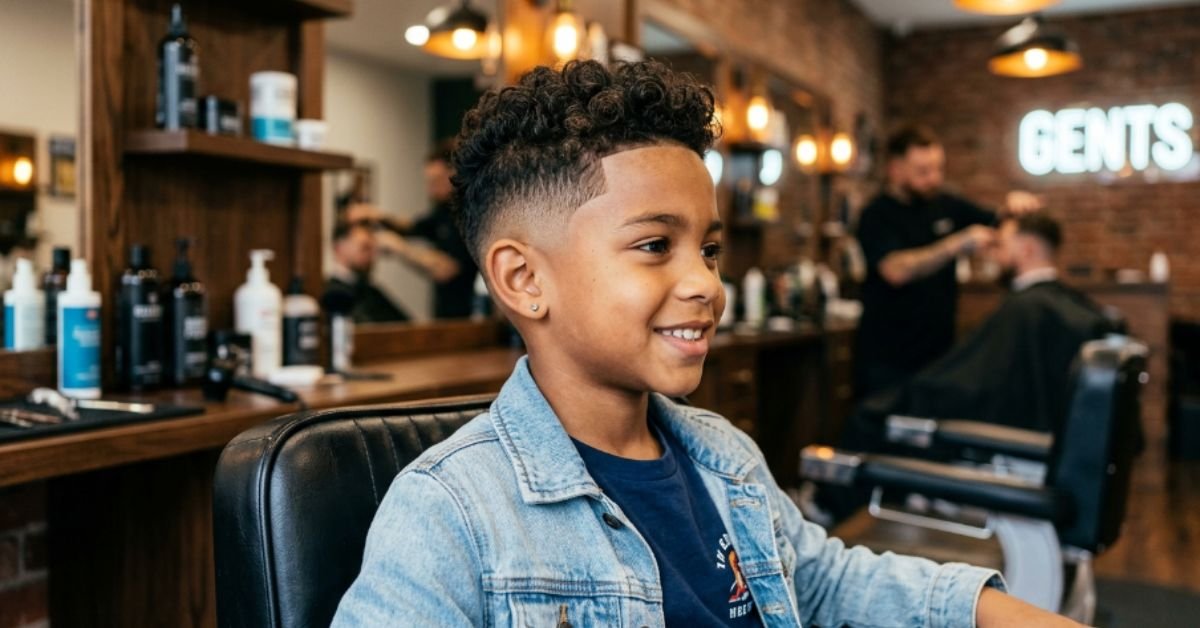
A burst fade is a fade haircut where the shortest section of hair curves around the ear in a half circle instead of running in a straight line across the back and sides. Picture a small sunburst radiating out from the ear; that’s the shape barbers are cutting.
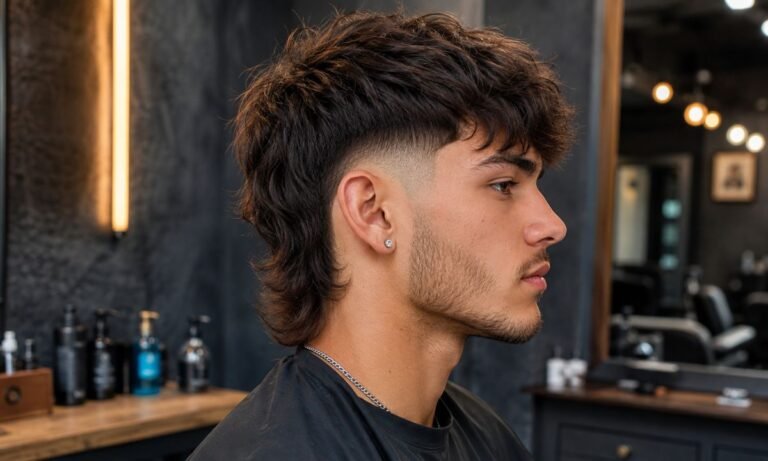
This curved detail is what separates a burst fade from a standard fade or a taper. On a regular fade, the graduation from short to long travels evenly across the whole head. On a burst fade, the fade “bursts” around the ear and then blends into longer hair toward the back of the neck, which is why more length is often left at the nape. That extra length in the back is also why burst fades pair so easily with mohawks, mullets, and faux hawks.
The fade itself can be cut at different heights (low, mid, or high) and to different depths (skin short or a softer “shadow” fade that leaves a light dusting of hair rather than bare scalp). That flexibility is a big part of why it works for so many kids and so many hair types.
Why Burst Fade Haircuts for Kids Are So Popular
Burst fade haircuts for kids have become one of the most requested cuts at barbershops this year, and the reasons go beyond looks. Here’s what keeps parents coming back to this style.
Works with Almost Any Hair Type
Thick, thin, curly, wavy, or pin straight, a burst fade can be shaped to work with a child’s natural texture. Curly haired kids get to keep bounce and volume on top while the sides stay tidy, while straight haired kids get a crisp, structured finish.
Easy to Maintain
Because the shortest hair is concentrated around the ear rather than spread across the whole head, regrowth tends to blend in more gradually than it does with a full fade. That can mean a little more room between trims without the cut looking messy.
Great for School and Special Events
A burst fade can be dressed up with a defined part for picture day or kept simple and low maintenance for a regular school week. It looks neat without needing daily styling effort from a busy parent.
Kids Love the Cool Factor
Older kids and tweens especially like that a burst fade looks more grown up than a basic buzz cut, and it opens the door to fun add ons like a shaved design or a lightning bolt part.
Pairs Well with Other Trends
Because more length is left at the back, a burst fade blends easily with mullets, mohawks, faux hawks, quiffs, and textured crops, so it grows with your child’s style as they get older.
Flexible for Different Ages
From a toddler’s first haircut to a teenager who wants something bold, the fade height and top length can be adjusted so the same basic style suits almost any age.
Which Burst Fade Is Right for Your Kid’s Age?
Age matters more than most parents expect when choosing a fade. Here’s a simple way to think about it.
- Toddlers (1 to 4 years): Stick with a low, soft burst fade or a shadow fade. Skin is more sensitive at this age, and toddlers rarely sit still long enough for sharp, precise lines, so a gentler fade forgives small movements during the cut.
- Young kids (5 to 9 years): A low or mid burst fade with a slightly longer top gives room to experiment without being high maintenance for a parent who’s still handling most of the styling.
- Tweens (10 to 12 years): This is a good age to introduce a mid or high burst fade, textured tops, or a simple design, since kids this age usually have opinions about their own hair and can sit through a longer appointment.
- Teens (13 and up): High burst fades, faux hawks, mullets, and dyed tips all become realistic options once a teen is ready to keep up with more frequent trims and their own styling routine.
Burst Fade vs. Other Kid-Friendly Fades
Parents often hear “fade,” “taper,” and “burst fade” used interchangeably at the barbershop, but they aren’t the same cut.
- Taper: A taper gradually shortens the hair at the edges, mainly around the sideburns and neckline, and keeps more overall length. It’s the most forgiving option and grows out gracefully, which makes it a solid choice for a first fade.
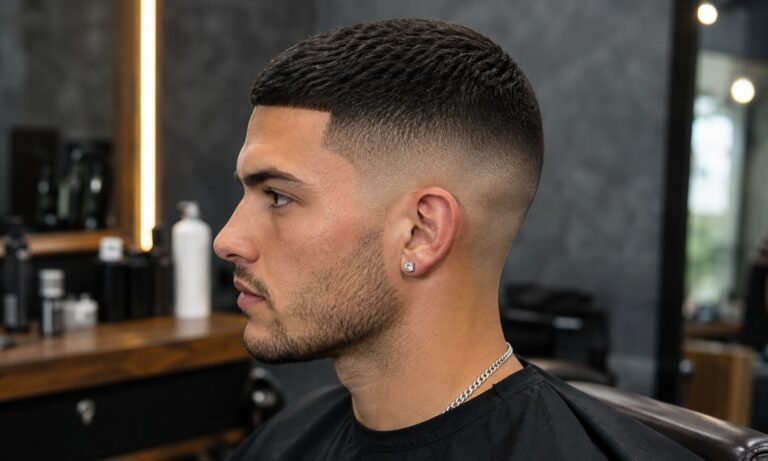
- Skin fade: A skin fade blends hair all the way down to bare skin for the sharpest possible contrast. It looks great but shows regrowth fastest and needs the most frequent trims.
- Drop fade: A drop fade curves downward behind the ear, following the natural shape of the head, and is especially popular with curly or textured top hair.
- Burst fade: A burst fade curves around the ear in a half circle rather than following a straight or dropped line, leaving more length at the nape. It’s the pick for kids who want a bit more shape and personality than a standard fade offers.
If your child has never had a fade before, a taper or a low burst fade is the easiest entry point. If they already know they like fades and want something with more character, the burst fade is the natural next step.
33 Trendy Burst Fade Haircuts for Kids That Parents Love in 2026
Here are 33 burst fade variations worth showing your barber, organized from classic and simple to bold and detailed.
1. Classic Burst Fade for Kids
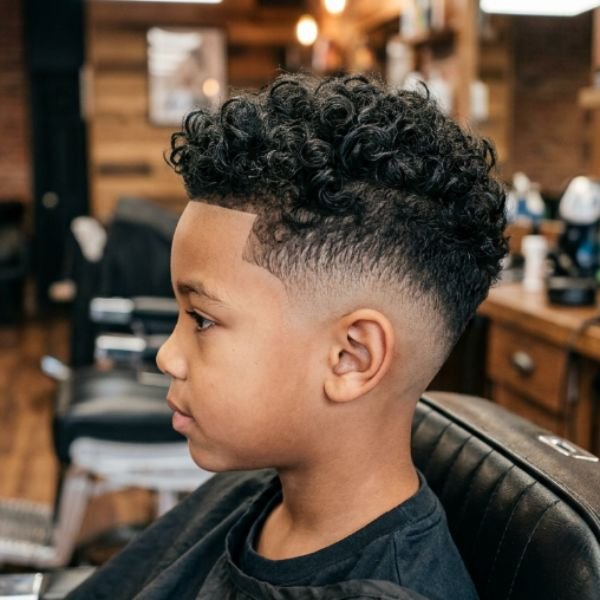
A clean, evenly blended burst fade with a slightly longer top. It’s the easiest style to ask for by name and works as a safe starting point for any first time burst fade.
2. Low Burst Fade for Kids
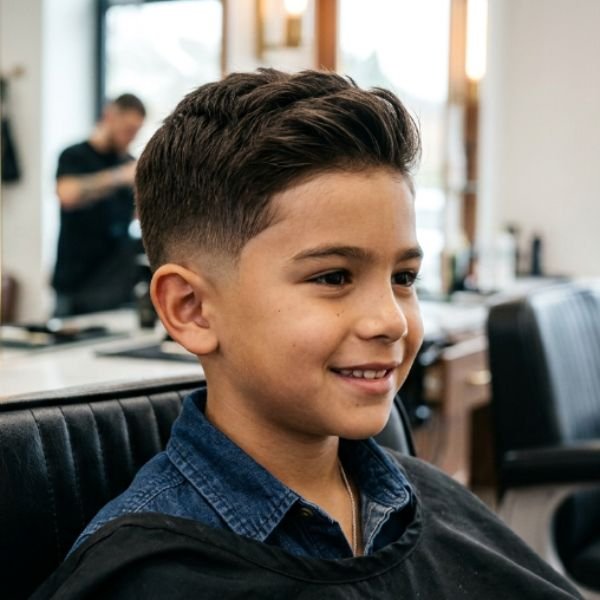
The fade sits close to the ear and doesn’t climb high up the head, giving a subtle, school appropriate look that grows out gently between cuts.
3. Mid Burst Fade for Kids
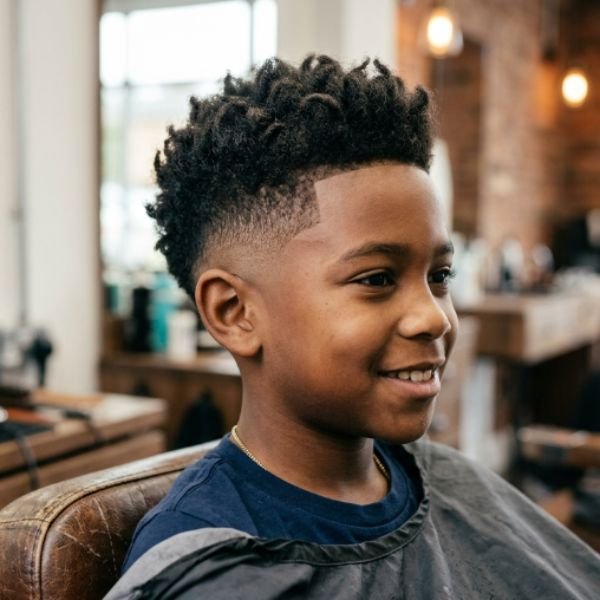
A balanced option that sits between low and high, offering more contrast than a low fade without being as bold as a high one. It suits the widest range of face shapes.
4. High Burst Fade for Kids
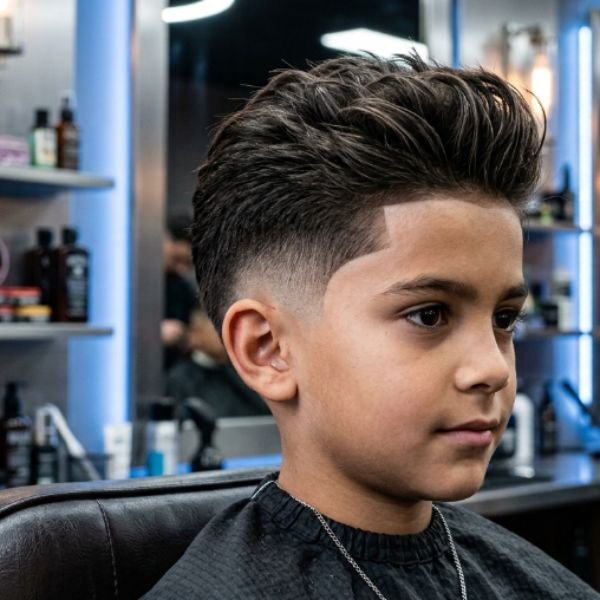
The fade climbs higher on the sides, creating stronger contrast with the top. It’s best suited to kids who want a sharper, more noticeable look.
5. Curly Burst Fade for Kids
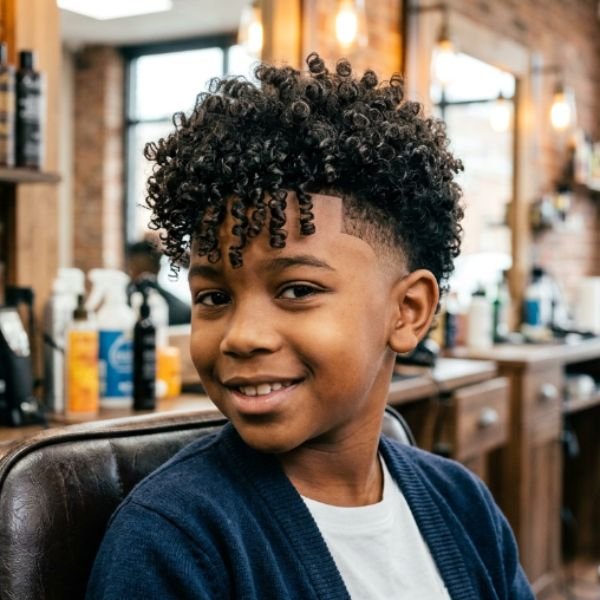
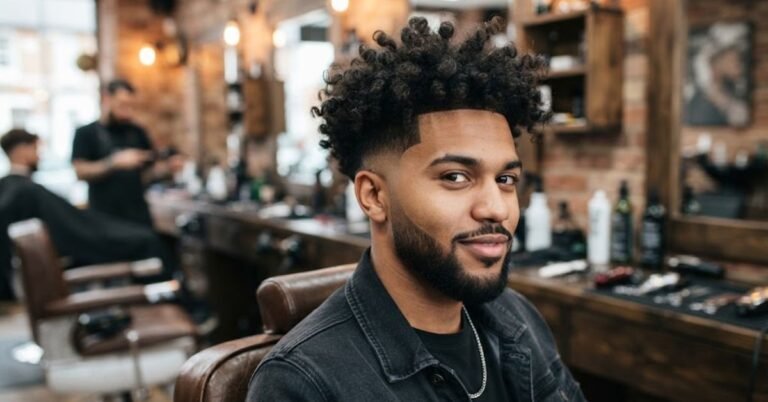
Curls stay full and bouncy on top while the sides fade tight around the ear. Barbers usually leave a bit more length here so the curl pattern keeps its natural shape.
6. Straight Hair Burst Fade
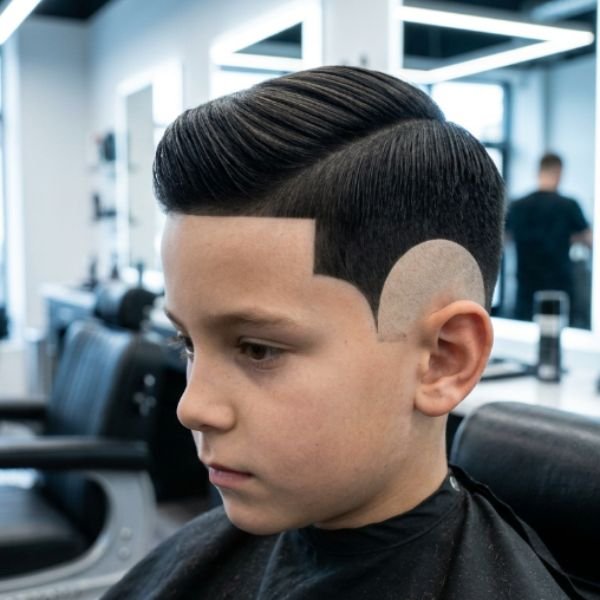
Straight hair lays flat over the fade for a crisp, structured finish that’s easy to comb into place each morning without extra product.
7. Textured Crop Burst Fade
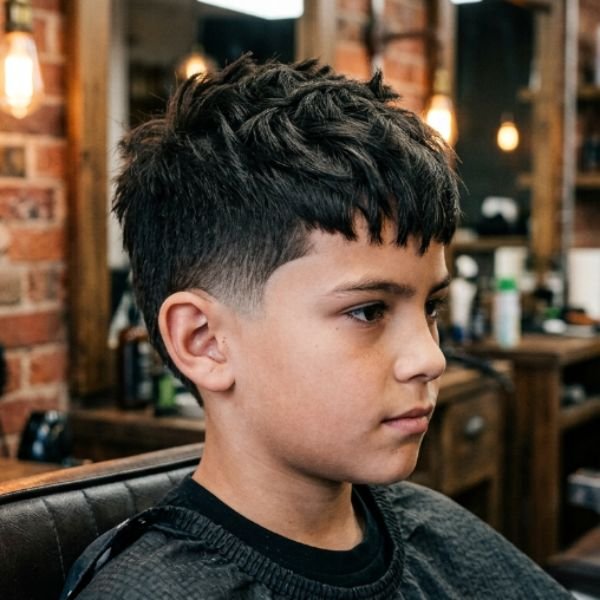
A choppy, textured top is paired with a burst fade underneath for a look that reads a little messy on purpose, which tweens especially tend to request.
8. Fluffy Burst Fade
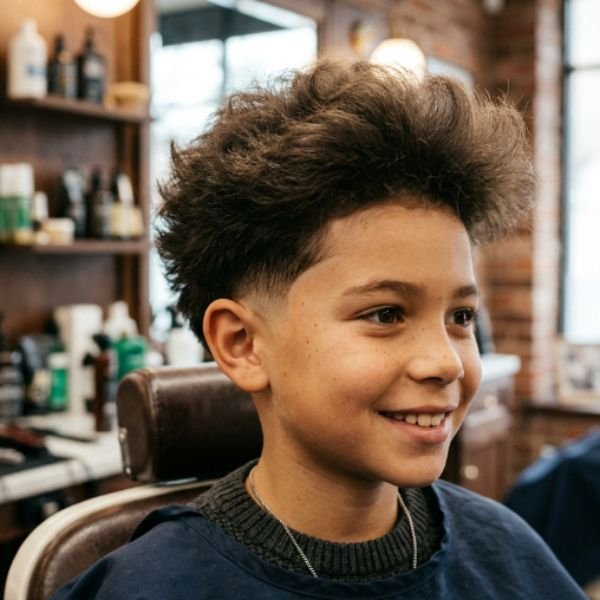
Longer, airy hair sits on top of the fade, adding visible volume without needing much styling product to hold its shape.
9. Burst Fade with Side Part
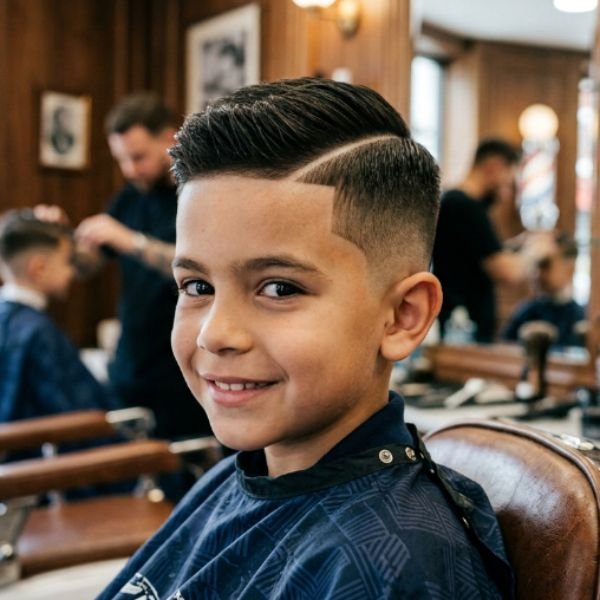
A defined side part gives this cut a neater, more polished finish, making it a smart pick for school photos or dressier family events.
10. Burst Fade with Hard Part
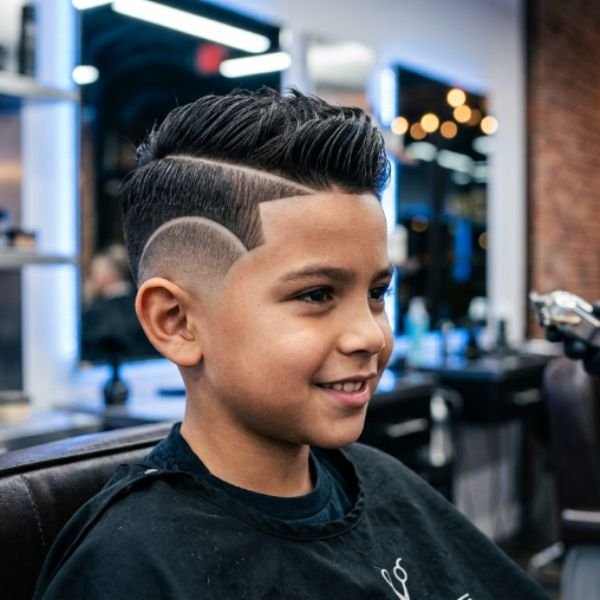
A shaved line replaces the usual comb part, adding a sharp graphic detail that older kids often ask for by name once they’ve seen it on someone else.
11. Burst Fade Faux Hawk
Hair is styled up and forward through the center of the head while the sides fade around the ear, giving a bold shape without committing to a full mohawk.
12. Burst Fade Mohawk
A true mohawk strip runs down the middle with a burst fade on both sides. It’s an eye catching choice for a kid who wants to stand out.
13. Burst Fade Mullet for Kids
Short, faded sides meet longer hair left at the back, giving the mullet trend a cleaner, more current edge thanks to the burst shape around the ear.
14. Burst Fade with Design
A shaved pattern, such as a star, stripe, or initial, is added into the fade itself for a fully custom look that’s popular for birthdays and picture day.
15. Lightning Design Burst Fade
A single lightning bolt shaved into the side of the fade is one of the most requested designs for younger boys who want something bold but simple.
16. Burst Fade with Spiky Hair
Short spikes on top, styled up with a light hold product, contrast nicely with the smooth curve of the fade for an energetic, playful look.
17. Messy Top Burst Fade
Top hair is left slightly longer and styled loosely for a relaxed, undone finish that still looks intentional thanks to the clean fade underneath.
18. Brush Up Burst Fade
Hair on top is brushed straight up and slightly back using a light styling cream, adding height while the burst fade keeps the sides sharp.
19. Short Fringe Burst Fade
A short, straight fringe sits low on the forehead, giving a tidy, low maintenance look that pairs well with a low or mid burst fade.
20. French Crop Burst Fade
A textured fringe with a slight forward push meets a burst fade on the sides, blending a European inspired top with a modern fade finish.
21. Crew Cut Burst Fade
A short, uniform top length paired with the burst fade gives a neat, sporty look that needs very little daily styling.
22. Buzz Cut Burst Fade
An all over buzzed top transitions into a slightly more defined burst fade around the ears, offering the lowest maintenance option on this list.
23. Taper Burst Fade
A softer, more gradual blend from top to sides gives a subtler version of the burst fade, ideal for kids who aren’t ready for high contrast.
24. Thick Hair Burst Fade
The fade removes bulk from the sides while keeping the top’s natural thickness intact, preventing the haircut from looking heavy or overgrown.
25. Wavy Hair Burst Fade
Natural waves are left long enough on top to move and show texture, while the burst fade keeps the sides controlled and clean.
26. School-Friendly Burst Fade
A low, understated fade with a simple top style keeps the cut within most school dress code guidelines while still looking sharp.
27. Athlete-Inspired Burst Fade
A short, practical top paired with a mid burst fade stays neat through practices and games without needing to be restyled during the day.
28. Burst Fade with Line Up
A crisp, straight edge up along the hairline and temples sharpens the front of the cut and makes the burst fade look extra fresh right after a trim.
29. Burst Fade with Quiff
The front section of hair is lifted up and back to create height, giving a stylish, slightly retro finish that works well on medium to long top hair.
30. Modern Edgar Burst Fade
A blunt, straight across fringe with rounded sides and a burst fade underneath gives this trending style a bold, boxy silhouette.
31. Burst Fade with Dyed Tips
Subtle color placed only on the tips of the top hair adds a pop of personality to an otherwise classic burst fade, popular with teens.
32. Clean Cut Burst Fade
A no frills, evenly blended version with nothing extra added. It’s the easiest style to maintain and the safest choice for conservative dress codes.
33. Trendy Kids Burst Fade for 2026
A combination cut that mixes a mid burst fade with a slightly textured, brushed up top, capturing the overall direction most barbers are leaning toward this year.
How to Ask Your Barber for a Burst Fade (Step by Step Tutorial)
Walking into a barbershop without the right words can lead to a cut that isn’t what you pictured. Follow these steps to communicate clearly.
Step 1: Show a Picture
Save a photo from this list or a similar one from your phone. A clear side view, and a back view if the style has more length at the nape, removes almost all guesswork for the barber.
Step 2: Explain the Fade Height
Tell the barber whether you want a low, mid, or high burst fade. Placement matters more than the label, so pointing to where you want the shortest section to sit helps avoid confusion.
Step 3: Describe the Top Length
Let the barber know how much length to leave on top, whether that’s a short crew length, a medium brushable length, or something long enough to style into a quiff.
Step 4: Mention Any Extra Details
If you want a design, a hard part, a line up, or dyed tips, say so before the cut starts rather than partway through.
Step 5: Ask About Maintenance
Ask the barber how often the specific fade height and depth will need a trim so you can plan appointments realistically around your child’s schedule.
Step 6: Speak Up During the Cut
For younger kids especially, check in partway through if anything looks different than expected. It’s easier to adjust mid cut than after everything is finished.
How to Style Burst Fade Haircuts for Kids
Styling a burst fade doesn’t have to be complicated. For short, textured tops, fingers alone are often enough to arrange the hair into place. For a bit more control, work a small amount of lightweight styling cream or matte clay through slightly damp hair and shape it with your fingers rather than a comb for a more natural finish.
For curly hair, start with damp hair and smooth in a modest amount of curl cream or light gel, then scrunch gently to encourage the curl pattern rather than flatten it. If using a diffuser, keep the airflow low so it doesn’t blow the curls apart. For straight hair that needs more hold, a small amount of pomade run through the top and combed into a side part or brushed up quiff will hold its shape through a school day. In every case, start with less product than you think you need. Heavy layers of cream or gel weigh down fine hair and flatten curls, so add more only if the first small amount isn’t giving enough hold.
Maintenance Tips for Burst Fade Haircuts for Kids
A burst fade looks its best with a little routine upkeep. These habits keep it looking sharp between barbershop visits.
Schedule Regular Trims
Skin short burst fades usually need a trim every two to three weeks to keep the line crisp, while a softer shadow fade can often stretch to three or four weeks.
Wash Hair Regularly
Regular washing keeps the scalp clean and product from building up, which helps the fade line stay visible for longer between trims.
Use the Right Hair Products
Choose products formulated for a child’s finer hair and more sensitive scalp rather than reaching for an adult product with a heavier hold or stronger fragrance.
Protect Hair at Night
A satin or silk pillowcase, or a soft bonnet for curly hair, reduces friction overnight and helps keep both curls and styled tops looking fresh in the morning.
Avoid Overwashing
Washing too often can dry out both the scalp and the hair, so two to three times a week is usually enough unless your child is especially active.
Brush Hair Gently
Use a soft bristle brush or wide tooth comb, especially on curly or wavy hair, to avoid breakage and keep the top section looking full rather than thinned out.
Best Hair Products for Burst Fade Haircuts for Kids
The right product depends mostly on hair type and how much hold the style needs. Here’s a simple breakdown.
Lightweight Styling Cream
A good all around choice for most hair types, offering light hold and a natural finish without looking greasy or stiff.
Matte Clay for Texture
Ideal for textured crops and messy tops, matte clay adds grip and separation without shine, which suits an everyday school look.
Pomade for Sleek Styles
Best for side parts, hard parts, and slicked back styles where a smooth, controlled finish is the goal.
Curl Cream for Curly Hair
Formulated to define curls and reduce frizz without weighing down natural volume, making it the go to pick for curly burst fades.
Leave-In Conditioner
Helps keep hair hydrated between washes, particularly useful for curly or coily hair types that dry out more easily.
Hair Spray for Extra Hold
Useful for keeping a quiff or faux hawk standing up through an active school day, though it’s best used sparingly on kids’ finer hair.
Product Tips for Parents
Start with a small amount, about the size of a pea, and add more only if needed. Look for products labeled as kid friendly or tear free where possible, and avoid strong fragrances that can irritate sensitive skin.
Is a Burst Fade School-Friendly?
Most burst fades are considered school appropriate, especially low and mid fades without added designs. If your child’s school has a strict dress code, a low burst fade with a simple, classic top and no shaved patterns is the safest option, and it’s worth checking your school’s specific handbook before booking anything with a high fade or a design, since some schools do restrict shaved patterns or extreme height.
Common Mistakes to Avoid
A few simple missteps can throw off an otherwise great haircut.
- Skipping the photo reference. Descriptions alone often lead to a different result than what you had in mind.
- Going too short too soon. A first burst fade doesn’t need to be a skin fade; a softer shadow fade is more forgiving while everyone gets used to the style.
- Ignoring face shape. A fade that’s too high can make a round face look wider, while a low fade tends to suit most face shapes safely.
- Waiting too long between trims. Letting a skin short fade grow out for a month or more makes it look patchy rather than intentional.
- Overusing product. Too much cream or gel on a child’s finer hair can make the style look greasy rather than styled.
Tips for a Toddler’s First Burst Fade
Choose a barber experienced with young kids, book an early morning appointment when your toddler is most likely to be calm, and ask for a low, soft fade rather than a sharp skin fade. Bring a favorite show or toy to keep them distracted, and don’t worry about small imperfections; a toddler’s first haircut rarely needs to be salon perfect.
Benefits and Drawbacks of a Burst Fade
Like any haircut, the burst fade comes with trade offs worth knowing before you book.
Benefits
- Works with nearly every hair type and texture
- Flexible across a wide range of ages
- Pairs easily with mullets, mohawks, and textured tops
- Regrowth tends to blend in more gradually than a full fade
- Offers a distinctive shape that stands out from a basic haircut
Drawbacks
- Requires a skilled barber to get the curved line clean
- Skin short versions need more frequent trims to stay sharp
- Not every school dress code allows higher or more dramatic fades
- Can take longer to cut than a simple buzz cut, which matters for younger kids
Frequently Asked Questions
What age can a kid get a burst fade?
Most barbers can perform a soft, low burst fade on toddlers as young as one or two, though a full skin fade is usually better suited to kids who can sit still longer.
How often does a burst fade need a trim?
A skin short burst fade typically needs a trim every two to three weeks, while a softer shadow fade can often go three to four weeks.
Is a burst fade the same as a taper fade?
No. A taper keeps more overall length and fades gradually at the edges, while a burst fade curves sharply around the ear in a distinct half circle shape.
Does a burst fade work on curly hair?
Yes. A burst fade is one of the best fade styles for curly hair because it keeps the sides controlled while letting the curls on top stay full and bouncy.
Can a burst fade be done at home?
A basic burst fade is possible at home with clippers and patience, but the curved line around the ear is difficult to get symmetrical, so most parents prefer a professional barber for a clean result.
Is a burst fade appropriate for school?
Yes, particularly low and mid burst fades without added designs. Always check your school’s dress code before adding a high fade or a shaved pattern.
Conclusion
A burst fade earns its place as one of the most requested kids’ haircuts of 2026 because it adapts to almost any hair type, age, and personality. Whether your child wants a low key crew cut version for everyday school or a bold design for picture day, there’s a variation on this list to match. Bring a clear photo to your appointment, explain the fade height you want, keep up with regular trims, and the style will practically take care of itself between visits.