Burst Fade Haircut Guide: 35 Styles by Face Shape & Hair Type (2026)
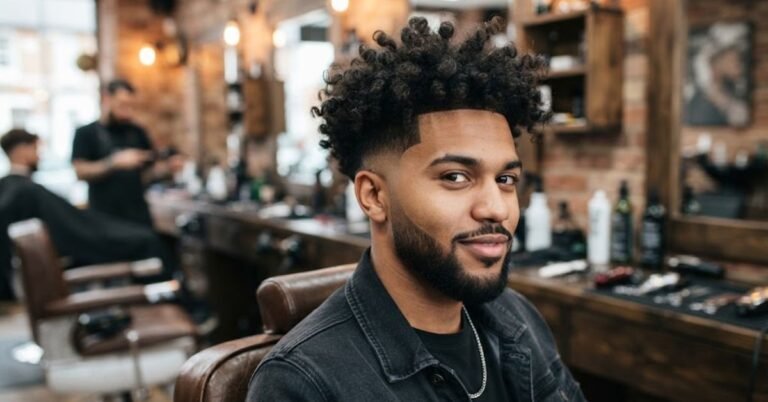
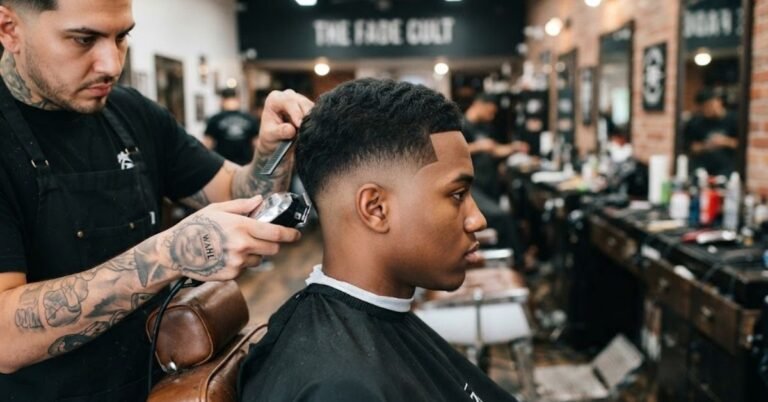
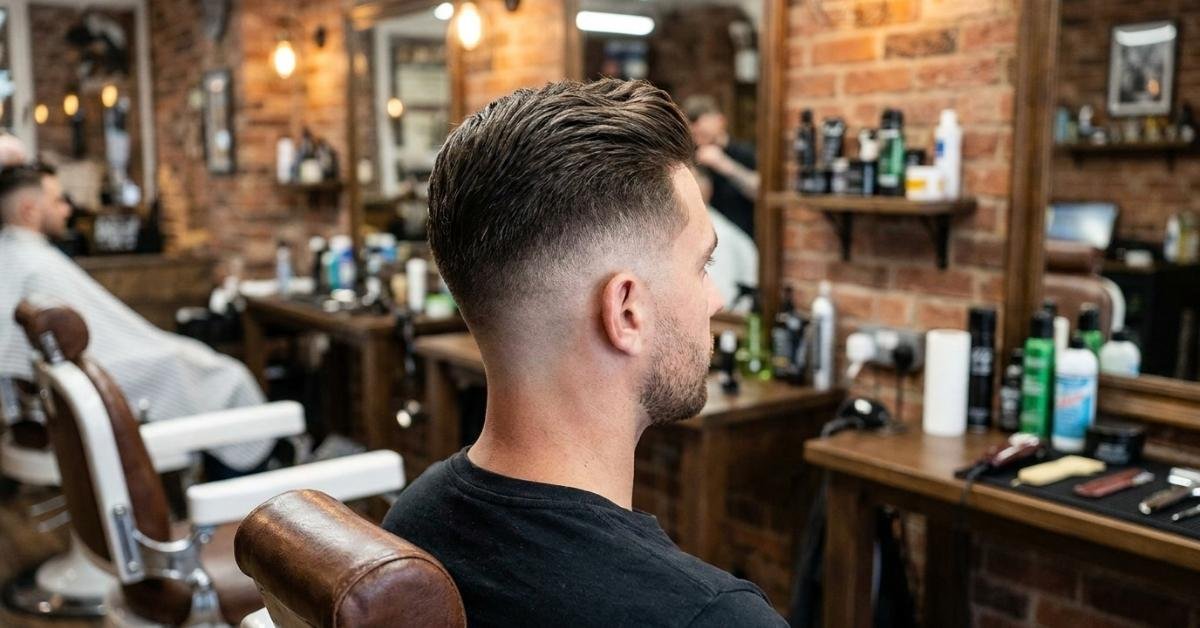
You have probably seen it on a mullet, a mohawk, or a curly top: a fade that wraps around the ear in a clean half circle. That curve is the signature of this cut, and it is one of the most requested cuts in barbershops right now.
This guide explains what the cut is, who it suits, and how to order it without confusion. You will find 35 style ideas, face shape and hair type advice, a styling routine, a barber-level tutorial, real cost expectations, and answers to the questions people ask most.
Quick Answer
A burst fade haircut is a fade that curves around the ear and runs down to the neckline, leaving more length at the back and top. It works best for mullets, mohawks, faux hawks, and curly or textured tops. Ask for it by name, pick a low, mid, or high height, and bring photos.
What is a Burst Fade Haircut?
A burst fade is a fade that bends in a half circle around the ear instead of running straight across the head. The hair is cut shortest near the ear and sideburn, then grows longer as the fade moves back toward the nape and up toward the crown.
It is a shape for the sides, not a full haircut. Think of it as the frame. What you put on top, whether that is a mullet, a crop, or loose curls, is a separate choice.
Three things define the cut:
- The curve: the fade follows the ear, not a flat horizontal line.
- The height: low, mid, or high, depending on how far up the fade starts.
- The length left behind: the back often stays longer, which is why the cut pairs so well with mullets and tails.
Who Should Get a Burst Fade Haircut?
This cut suits more people than you might expect. It works best if you:
- Want a modern look with clear structure around the ears
- Have a flatter back of the head and would like length there to add shape
- Have curly, wavy, coily, or thick hair that needs controlled sides
- Like a mullet or mohawk but want the sides tidy
- Are happy to visit a barber every two to four weeks
It is less ideal if you want a one-length, zero-effort cut, or if your barber has not done the curve before. The shape is easy to get wrong, so skill matters more here than with a basic fade.
Why Burst Fade Haircuts Are Trending in 2026
Several trends are pushing this cut forward:
- The mullet revival. Modern mullets need clean sides, and the curve gives them a sharper outline.
- Texture-first styling. Curls, waves, and messy tops look better with a controlled base.
- Social media. The curve photographs well from the side and back, so it spreads fast on short video and photo feeds.
- Customization. Barbers can adjust height, add a design, or blend into a beard, so no two cuts look the same.
- Easy growth stages. The cut grows out in a way that still looks intentional for a few weeks.
Where the Burst Fade Comes From
This cut did not appear overnight. It grew out of fade work that has been central to Black barbering for decades, including tapers, high-top fades, and sharp edge-ups. Mohawks and faux hawks added the idea of keeping length down the middle while keeping the sides short.
Barbers then began curving the fade around the ear to give those styles a more flowing outline. Social media helped it reach a wider audience, and the mullet comeback gave it a perfect partner. Because it spread through barbers and online sharing rather than one inventor, you will see slightly different names and definitions across shops.
35 Burst Fade Haircut Styles for Men
Each style below lists who it suits best. Mix and match the fade height and the top length to fit your own hair.
1: Burst Fade Mullet
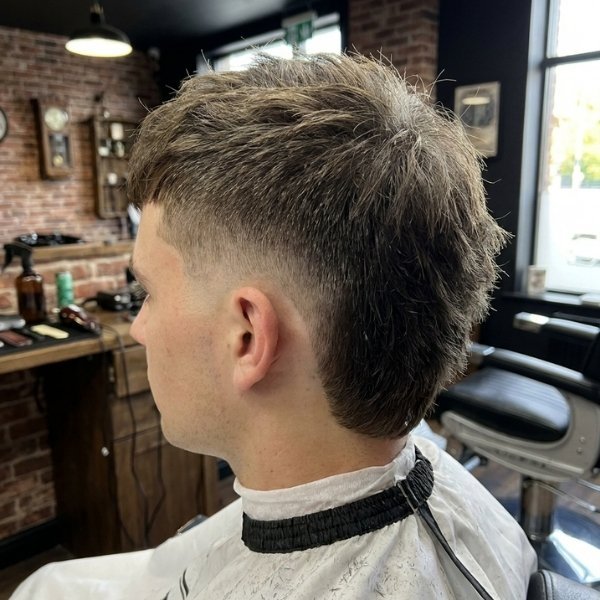
The most popular pairing. Short, curved sides blend into a longer back, with a fuller top. It is bold, but the fade keeps it tidy.
Low Burst Fade Mullet
The fade starts low, close to the ear and nape. Sides stay fuller, so the look is softer and easier to wear to work or school.
Best for: first-time mullet wearers.
Mid Burst Fade Mullet
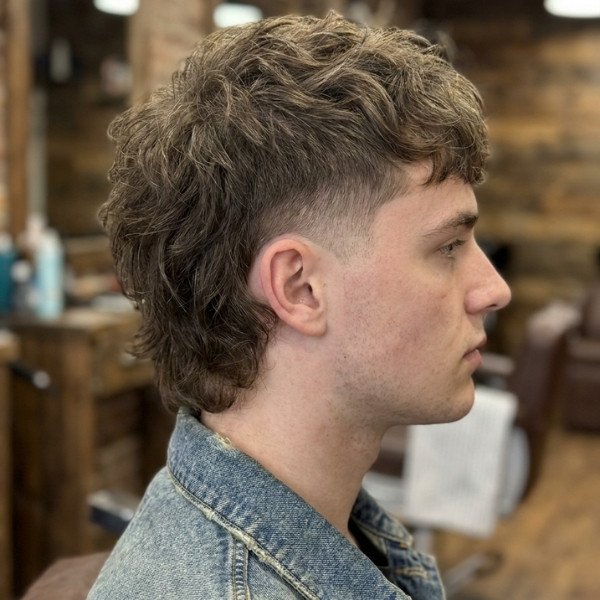
A balanced option. The fade sits around temple level, giving clear contrast without going too extreme.
Best for: most face shapes and everyday wear.
High Burst Fade Mullet
The fade climbs high on the sides for strong contrast with the longer back and top. It is a statement cut.
Best for: confident styles and rounder faces that benefit from height.
Straight Hair Burst Fade Mullet
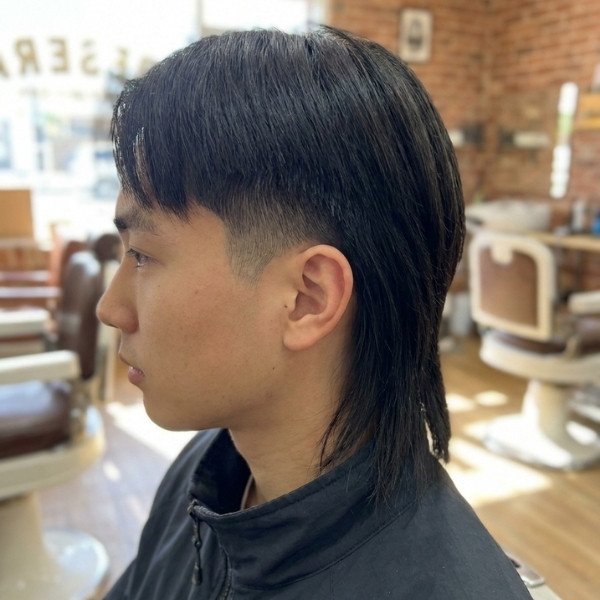
Straight hair shows the curve very clearly. Ask for light texturizing on top so the length does not fall flat.
Best for: straight, medium-thick hair.
Curly Hair Burst Fade Mullet
Curls add natural volume to the top and back. Keep the curls moisturized and defined so the shape reads clearly.
Best for: loose to tight curls.
2: Low Burst Fade
A subtle curve that starts near the ear and neckline. It is the safest choice if you want a cleaner look without major contrast.
Best for: office settings and first-timers.
3: Burst Fade Curly Hair
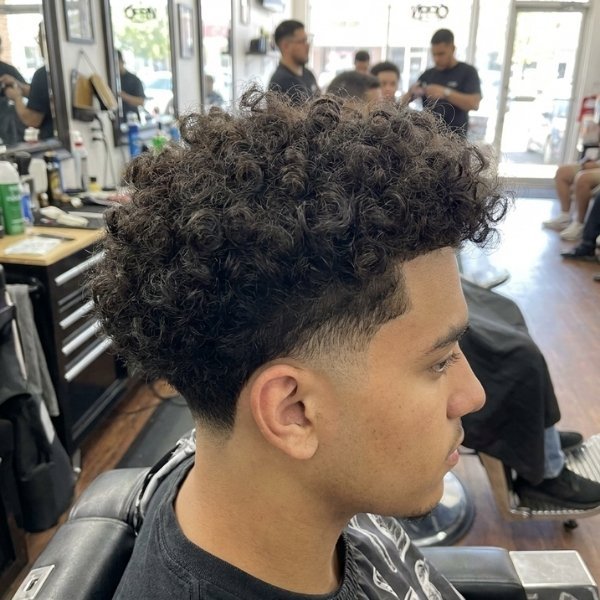
Short, controlled sides with curls left to grow on top. The contrast makes curls look fuller and more intentional.
Best for: wavy to curly hair types.
4: Mid Burst Fade
The all-rounder. It offers visible contrast but still looks natural with most tops and face shapes.
Best for: anyone unsure which height to pick.
5: Burst Fade with Design
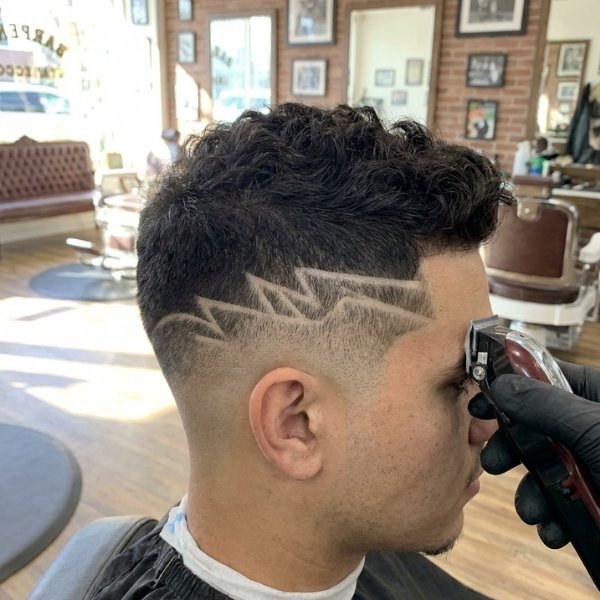
Barbers can add a line, part, or small pattern into the shaved area. Keep it simple, since designs fade quickly as hair grows.
Best for: people who like a personal detail and can visit often.
6: Burst Fade Mohawk
The curve frames a strip of longer hair down the center. It looks sharper than a standard mohawk because the sides follow the ear.
Best for: bold styles and thick or curly hair.
7: Burst Fade Straight Hair
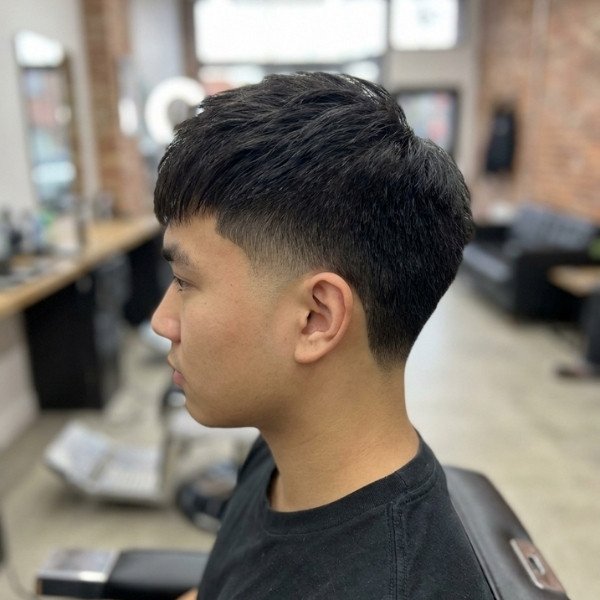
Straight hair gives a clean, graphic look. Use a matte product to avoid a flat, oily finish.
Best for: straight hair with medium density.
8: Taper Burst Fade
A softer blend where the hair tapers gradually into the neckline while keeping the curve. It is less dramatic than a skin version.
Best for: professional settings.
9: High Burst Fade
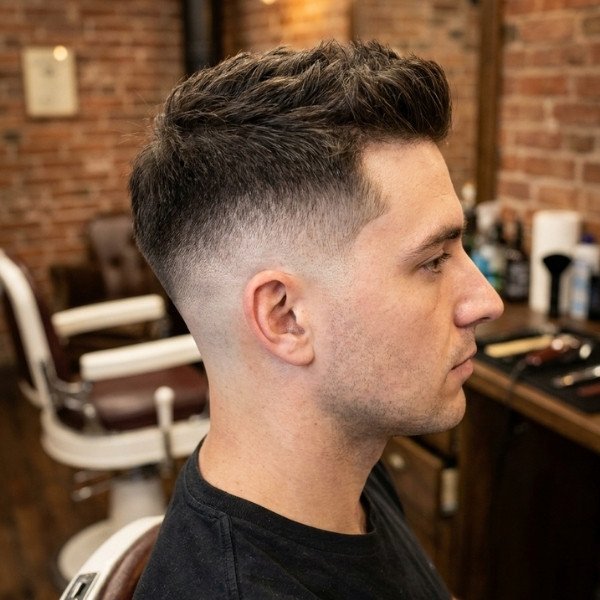
The fade starts high on the head, which creates strong contrast. It makes the top look taller.
Best for: round and square faces.
10: Burst Fade Buzz Cut
A very short top with a curved fade on the sides. It is low effort, but the curve keeps it from looking basic.
Best for: minimal styling routines and hot climates.
11: Short Burst Fade
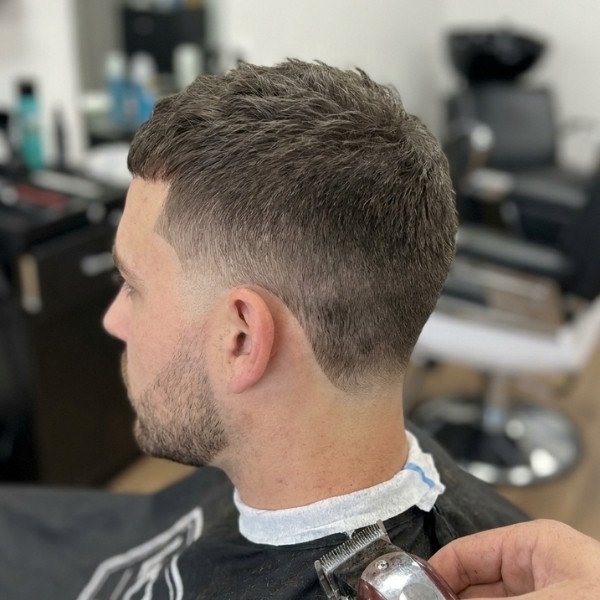
Everything stays short, including the top. It is neat and quick to style, but it needs regular trims to stay crisp.
Best for: active lifestyles.
12: Burst Fade Textured Fringe
A forward-swept, choppy fringe over a curved fade. It softens a high forehead and adds a youthful feel.
Best for: diamond, oblong, and receding hairlines.
13: V Shape Burst Fade
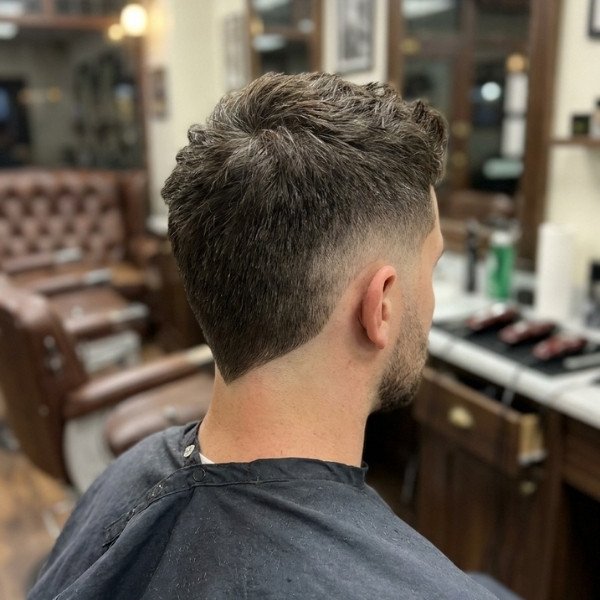
The back is cut into a V pointing down the nape, flowing from the curve. It works well with mullet lengths and shows off a clean neckline.
Best for: medium to long back lengths.
14: Burst Fade Long Hair
Long hair on top and back with short, curved sides. It balances length with structure so the hair looks styled, not unkempt.
Best for: people growing out their hair.
15: Burst Fade Slick Back
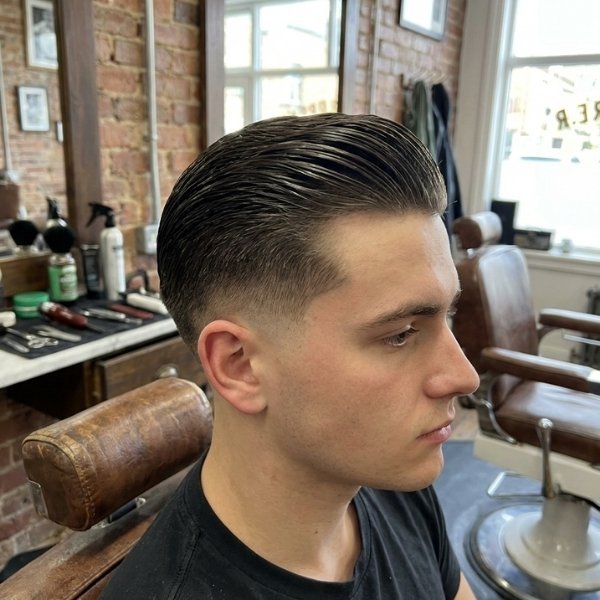
Hair is combed back over a curved fade. Use a pomade with medium shine and a light hold.
Best for: formal events and neat looks.
16: Comb Over Burst Fade
A side part with a clean, curved fade underneath. It is a modern take on a classic.
Best for: work settings and straight to wavy hair.
17: Burst Fade Wavy Hair
Waves add movement to the top while the fade keeps the sides sharp. Sea salt spray or a light cream helps define the pattern.
Best for: natural waves.
18: Textured Burst Fade
Choppy layers on top add depth. This style looks relaxed but still polished.
Best for: fine to medium hair that needs volume.
19: French Crop Burst Fade
A short, blunt fringe sits above a curved fade. It is simple, tidy, and easy to style with a bit of clay.
Best for: oval and square faces.
20: Burst Fade Back View
This is a back-focused look, where the curve and neckline are the star. Ask for a clean, rounded or tapered neckline.
Best for: anyone who wants the back to look as good as the front.
21: Burst Fade Edgar
An Edgar cut features a blunt, straight fringe with short sides. Adding the curve gives it a modern edge.
Best for: thick straight hair and bold fringes.
22: Burst Fade with Beard
The fade blends into the beard so there is no harsh line at the sideburns. Ask your barber to match the beard length to the fade.
Best for: men with medium to full beards.
23: Blowout Burst Fade
Hair on top is blow-dried upward for volume. It gives a full, lifted shape that contrasts the tight sides.
Best for: thick or wavy hair.
24: Burst Fade for Black Men
Coils and tight curls hold the shape very well, so the curve looks crisp. Pairing it with twists, waves, or a high-top shape creates distinctive looks.
Best for: coily and tightly curled hair.
25: Asian Burst Fade
Straight, strong hair responds well to texturizing and a clean curve. Mid height with a textured fringe or short mullet is a common choice.
Best for: thick, straight hair.
26: Burst Fade Blonde Hair
Bleached or natural blonde tops stand out against skin-short sides. Use purple shampoo to keep brassiness down.
Best for: people who like color contrast.
27: Burst Fade Afro
A rounded afro on top with a curved, tapered base. The shape stays defined if you shape the top regularly.
Best for: natural afro texture.
28: Undercut Burst Fade
The sides are cut very short, then connected to a longer top. The curve softens the usual hard line of an undercut.
Best for: strong contrast between top and sides.
29: Grown Out Burst Fade
As hair grows, the fade softens and looks more relaxed. It can be a good in-between stage if you want to skip a visit.
Best for: relaxed schedules.
30: Burst Fade Fluffy Hair
Soft, airy volume on top paired with neat sides. A light blow dry and a touch of texture powder is enough.
Best for: fine or straight hair that needs body.
31: Skin Burst Fade
The fade goes all the way down to bare skin near the ear and neckline. It is the sharpest version and needs the most upkeep.
Best for: bold looks and weekly touch-ups.
32: Drop Burst Fade
The fade line drops behind the ear instead of staying level. It follows the head’s natural curve and adds flow to the cut.
Best for: people with a rounded skull shape.
33: Messy Burst Fade
Tousled, uneven texture on top with a clean curve underneath. It looks effortless, which is the point.
Best for: casual wear and wavy or curly hair.
34: Burst Fade Pompadour
A tall, swept-back top with a curved base. The fade keeps the volume from looking heavy.
Best for: longer hair and strong styling products.
35: Burst Fade Quiff
A lifted front with shorter sides. It is a polished style that works with straight and wavy hair.
Best for: oval, square, and heart faces.
How to Choose the Right Barber for a Burst Fade
The curve is easy to get wrong, so choose your barber carefully. Look for these signs:
- Portfolio proof: check their social media or shop page for curved fades, mullets, and mohawks from the side and back.
- Experience with your hair type: curls, coils, and straight hair all behave differently under clippers.
- Consultation habits: a good barber asks questions before starting.
- Clean tools and tidy station: this shows care and professionalism.
- Reviews: read for words like “precise,” “blended,” and “listened.”
If you are not sure, book a shorter service first, or visit for a consultation before committing.
How to Ask Your Barber for a Burst Fade
Clear communication prevents most bad haircuts. Use this simple process.
Bring Reference Photos
Show photos from more than one angle, especially the side and back. A single front photo hides the curve.
Choose Your Fade Height
Say the name, then the height. For example, “a mid burst fade.” Low keeps more hair, mid is balanced, and high is the boldest.
Decide the Length on Top
Tell your barber how much you want to keep. Use inches or a clipper guard number if you know it, and point to the photo.
Specify the Neckline
Ask for a rounded, squared, or tapered neckline. For mullets, a V shape or soft taper is common.
Mention Beard Blending
If you have a beard, ask to blend it into the fade so the transition looks natural.
Ask About Your Maintenance Schedule
Ask how often to return. Most barbers suggest every two to four weeks, depending on the height and how sharp you want it.
Quick Barber Checklist
- Say “burst fade” and the height
- Bring side and back photos
- Name the top length
- Pick a neckline shape
- Ask about beard blending
- Confirm how often to return
Best Burst Fade Haircut by Face Shape
The right height and top length can balance your features. Use these as starting points.
Round Face
Go for a mid or high fade with volume on top. The added height makes the face look longer.
Oval Face
You can wear almost anything. Try a mid burst with a textured top or a mullet.
Square Face
A low or mid fade with a softer, textured top can soften a strong jawline.
Diamond Face
A fringe or textured top adds width to the forehead and balances wide cheekbones.
Heart Face
Choose a low or mid fade with a fringe. Avoid too much height on top, which can make the forehead look larger.
Oblong Face
Keep the fade low to mid and add width with side volume or a fringe. Too much height can make the face look longer.
Quick Face Shape Guide
| Face Shape | Best Fade Height | Top Style |
| Round | Mid to high | Volume or quiff |
| Oval | Any | Mullet, crop, or textured |
| Square | Low to mid | Textured, soft fringe |
| Diamond | Low to mid | Fringe or textured top |
| Heart | Low to mid | Fringe or side part |
| Oblong | Low to mid | Fringe or side volume |
Expert Barber Advice
Barbers often point out that face shape is only one factor. Head shape, hairline, hair density, and personal style matter just as much. If you are unsure, ask your barber to show you the shape in the mirror before they start, using their fingers or a comb to mark the fade line.
Best Burst Fade Haircut by Hair Type
Straight Hair
Straight hair shows every line, so the curve looks very clean. Add texture on top to avoid a flat shape.
Curly Hair
Curls give natural volume and make the contrast stronger. Keep the hair moisturized to reduce frizz.
Wavy Hair
Waves are very flexible. A mid fade with a textured top works for most wavy hair.
Thick Hair
Thick hair benefits from debulking, which removes weight so the shape sits better. A mid or high fade keeps it manageable.
Thin or Fine Hair
Keep the top short to medium and use light products. A low or mid fade keeps the sides from looking too bare.
Coily or Afro Hair
Coily hair holds crisp lines. Regular shaping and moisture keep the style neat and the edges clean.
Quick Hair Type Guide
| Hair Type | Best Style Idea | Key Tip |
| Straight | Slick back or French crop | Use matte products |
| Curly | Curly top with mid fade | Moisturize daily |
| Wavy | Textured mullet | Use sea salt spray |
| Thick | Mid or high fade | Ask for debulking |
| Thin or fine | Short textured top | Use light products |
| Coily or afro | Afro or twists | Keep edges sharp |
Best Burst Fade Haircut by Age
The cut is flexible enough for different ages, as long as the top length and fade height match the setting.
- Teens and early 20s: high fades, mohawks, and bold mullets are popular and easy to carry.
- Late 20s and 30s: a mid fade with a textured crop or short mullet balances style and professionalism.
- 40s: a low burst or taper burst with a side part or textured top looks sharp without trying too hard.
- 50s and beyond: a low burst with a short, neat top gives structure and can make thinning hair look intentional.
Confidence matters more than age, so pick what you will enjoy maintaining.
Burst Fade for Receding Hairlines and Thinning Hair
You can still wear this cut if your hairline is changing. The goal is to draw attention away from the hairline and toward the overall shape.
- Keep the top short or textured: long, thin hair can make thinning more obvious.
- Try a textured fringe: it softens the forehead and hairline.
- Choose a low or mid fade: this keeps some density on the sides.
- Go for a skin burst with a buzzed top: a bold, clean look can make thinning less noticeable.
- Avoid combing hair across the hairline: it rarely hides much and can look dated.
If hair loss worries you, a doctor or dermatologist can explain your options.
Best Products for Burst Fade Styling
The right product depends on your hair type and the finish you want.
- Matte clay: gives hold and texture without shine. Good for crops, fringes, and messy looks.
- Pomade: adds shine and control. Best for slick backs and pompadours.
- Sea salt spray: adds grip and a beachy texture for wavy or straight hair.
- Curl cream: defines curls and reduces frizz.
- Texture powder: adds lift to fine hair.
- Light gel or paste: gives a flexible hold for shorter styles.
- Leave-in conditioner: keeps curls and coils soft.
- Heat protectant: use before blow drying.
Pro Tip
Start with a pea-sized amount, warm it between your palms, and add more only if needed. It is easier to add than to remove.
How to Style a Burst Fade Haircut?
Styling takes five to ten minutes once you know your routine.
1. Choose the Right Styling Products for Your Hair Type
Match the product to the finish you want. Fine hair needs lightweight products, while thick or curly hair can handle richer creams and clays.
2. Blow Dry Technique for a Clean and Voluminous Look
Towel dry first, then apply a heat protectant. Dry on medium heat, lifting the roots with your fingers or a brush. Finish with a cooler blast to set the shape.
3. How to Style a Burst Fade with Curly or Wavy Hair
Apply curl cream to damp hair and scrunch gently. Let it air dry or use a diffuser on low heat. Avoid brushing dry curls, which can create frizz.
4. Creating Texture and Definition With Pomade or Wax
Rub a small amount between your palms and work it through the top from back to front. Use your fingertips to separate sections and shape the finish.
Barber Tools Used to Create a Burst Fade
Knowing the tools helps you understand the process and talk to your barber.
- Clippers: remove bulk and start the fade, usually with different guard sizes.
- Trimmers: create sharp lines around the ears and neckline.
- Shears: cut and texturize the top and back.
- Razor or foil shaver: gives a skin-smooth finish in the shaved areas.
- Combs and brushes: guide the hair and check blending.
- Neck duster and cape: keep hair off your skin and clothes.
- Spray bottle: keeps the hair damp for control.
Step-by-Step Burst Fade Tutorial
This is a simplified look at what a skilled barber does. It is meant to help you understand the process, not to replace professional training.
Step 1: Prep the Hair
The barber washes or dampens the hair and combs it into place. They also check the head shape, hairline, and growth patterns.
Step 2: Create the Burst Shape
Using a comb or finger as a guide, the barber marks the curved line around the ear. This sets the area that will be faded.
Step 3: Debulk the Hair
For thick hair, the barber removes weight from the top and back with clippers or shears. This helps the shape sit properly.
Step 4: Set the Fade Lines
Starting at the bottom with a short guard, the barber cuts the shortest section. They then move up in steps, following the curve.
Step 5: Blend the Fade
The barber uses lever movement on the clippers and lighter guards to soften the lines. The goal is a smooth change from short to long.
Step 6: Detail the Fade
Trimmers or a razor clean up around the ear, sideburn, and neckline. This is where the cut gets its sharp finish.
Step 7: Clean the Edges
The barber shapes the front hairline and any beard line so everything looks balanced.
Step 8: Final Touch
The top is trimmed, styled, and finished with product. A last check from every angle catches uneven spots.
Final Result
You should see a smooth, rounded fade framing the ear and flowing into the neckline, with a top that matches your chosen style.
Burst Fade Haircut vs. Other Popular Fade Haircuts
Many people confuse these cuts. Here is a quick comparison.
| Cut | Shape | Best Feature |
| Burst fade | Curves around the ear | Frames mullets and mohawks |
| Taper fade | Gradual shortening at the edges | Neat and subtle |
| Drop fade | Line dips behind the ear | Follows the skull shape |
| Skin fade | Fades down to bare skin | Sharp contrast |
Burst Fade vs. Taper Fade
A taper is a gradual change in length, usually at the sideburns and neckline. A burst is a particular shape, the curve around the ear. You can combine both in one cut.
Burst Fade vs. Drop Fade
A drop fade dips down behind the ear in a smooth arc. The burst wraps all the way around the ear. They look similar from the side, so show your barber photos.
Burst Fade vs. Skin Fade
A skin fade describes how short the fade goes, down to bare skin. A burst describes the shape. You can combine them.
Why a Burst Fade Haircut Is Worth Trying
- It adds structure to long or textured tops
- It works across many hair types
- It can be adjusted to suit work or casual settings
- It grows out in a way that still looks decent
- It gives you a modern look without a major commitment
How Much Does a Burst Fade Cost?
Prices depend on your city, the barber’s experience, and the complexity of the cut. As a rough guide:
- United States: about $25 to $60 for a fade in many cities, with higher prices in large cities or premium shops.
- United Kingdom: about £10 to £25 for a fade cut in many towns, with more in big cities.
- Designs, beard blending, and longer styles: often cost extra.
A customary tip is around 20 percent, and more if the barber spent extra time getting it right. Remember to budget for regular visits and styling products, since upkeep adds to the true cost. Check prices with your barber before you sit down.
Burst Fade Haircut Glossary: Key Terms Explained
- Fade: a haircut where hair gradually gets shorter toward the skin.
- Burst: the curved shape of a fade around the ear.
- Taper: a gradual shortening at the sideburns and neckline.
- Skin fade: a fade that goes down to bare skin.
- Drop fade: a fade line that dips behind the ear.
- Mullet: shorter on the top and sides, longer at the back.
- Mohawk: a strip of longer hair down the middle with short sides.
- Faux hawk: a softer mohawk look without shaved sides.
- Debulking: removing weight from thick hair.
- Edge-up: cleaning the hairline with trimmers or a razor.
- Guard: a clipper attachment that controls the cutting length.
- Neckline: the shape at the bottom of the hairline, such as round, square, or tapered.
Common Mistakes to Avoid with a Burst Fade Haircut
Choosing the Wrong Burst Fade Variation
A high fade on a face that needs softness, or a low fade when you wanted contrast, can disappoint. Match the height to your face and goals.
Skipping Regular Barber Visits
The sharp look fades fast. Plan on a visit every two to four weeks.
Using Too Much Hair Product
Too much product weighs hair down and looks greasy. Start small.
Ignoring Hair Texture
Curly, straight, and coily hair all need different cuts and products. Tell your barber about your texture.
Forgetting Daily Hair Maintenance
A good cut still needs good care. Wash, condition, and style according to your hair type.
Quick Tip
Keep a photo of your favorite cut on your phone. It saves time and makes your next visit easier.
Conclusion
This cut is more than a passing trend. Its curved shape adds structure to mullets, mohawks, curls, and crops, and it can be adjusted for almost any face shape, hair type, and age.To get the best result, choose a skilled barber, be clear about height and top length, and bring photos from several angles.
Keep up with regular trims and use the right products for your hair.With 35 styles to pick from, you can find a version that fits your look and your routine. Save your favorites, book a consultation, and try the one that feels most like you.
FAQs
What is a burst fade haircut?
It is a fade that curves in a half circle around the ear and into the neckline. The top and back can stay longer.
Is a burst fade the same as a mullet?
No. The burst is a technique for the sides, while the mullet is the full hairstyle.
How often should I get a burst fade touched up?
Every two to four weeks keeps the lines sharp. Low fades can last a little longer.
How long does a burst fade take to grow out?
It softens within about two to three weeks and looks fully grown out in six to eight weeks.
What is the difference between a burst fade and a taper fade?
A taper is a gradual length change, while a burst is a curved shape. They can be combined.
Can I get a burst fade with short hair?
Yes. Short tops work well, though the curve is less dramatic than with longer hair.
Does a burst fade work with curly hair?
Yes. Curls add volume on top, and the fade keeps the sides neat.
What fade height should I choose?
Low is subtle, mid is balanced, and high is bold. Choose based on your face shape and comfort.
Is a burst fade good for thinning hair?
It can be. Keep the top short or textured and avoid long, thin lengths.
How do I ask my barber for a burst fade?
Say “burst fade,” name the height, and bring photos from the side and back.
How much does a burst fade cost?
Many barbers charge between $25 and $60 in the US, depending on location and skill. Always confirm before the cut.
What products should I use on a burst fade?
Choose matte clay, pomade, curl cream, or sea salt spray based on your hair type and finish.